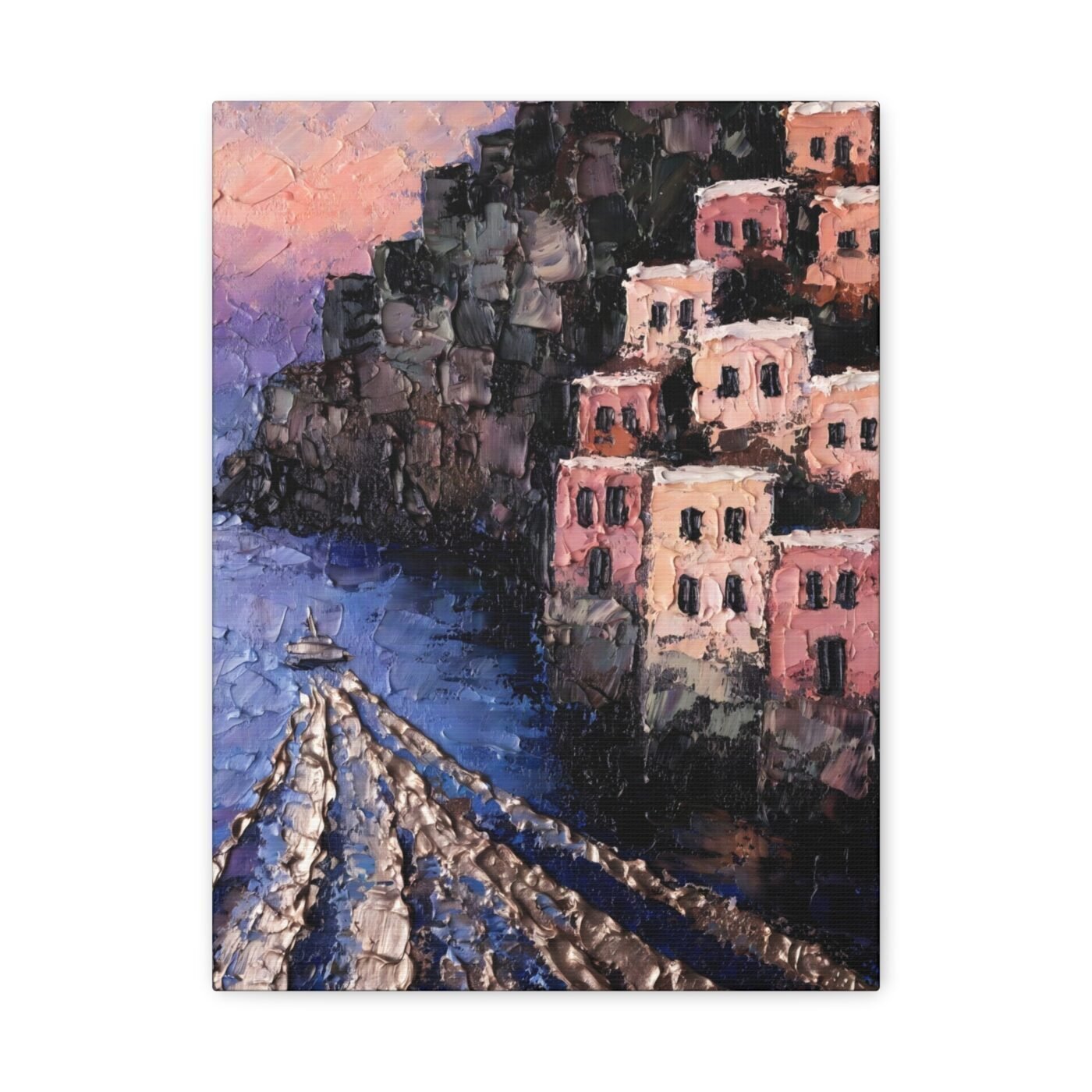

Bellini drags his knife the way someone learns a harbour by rowing it.
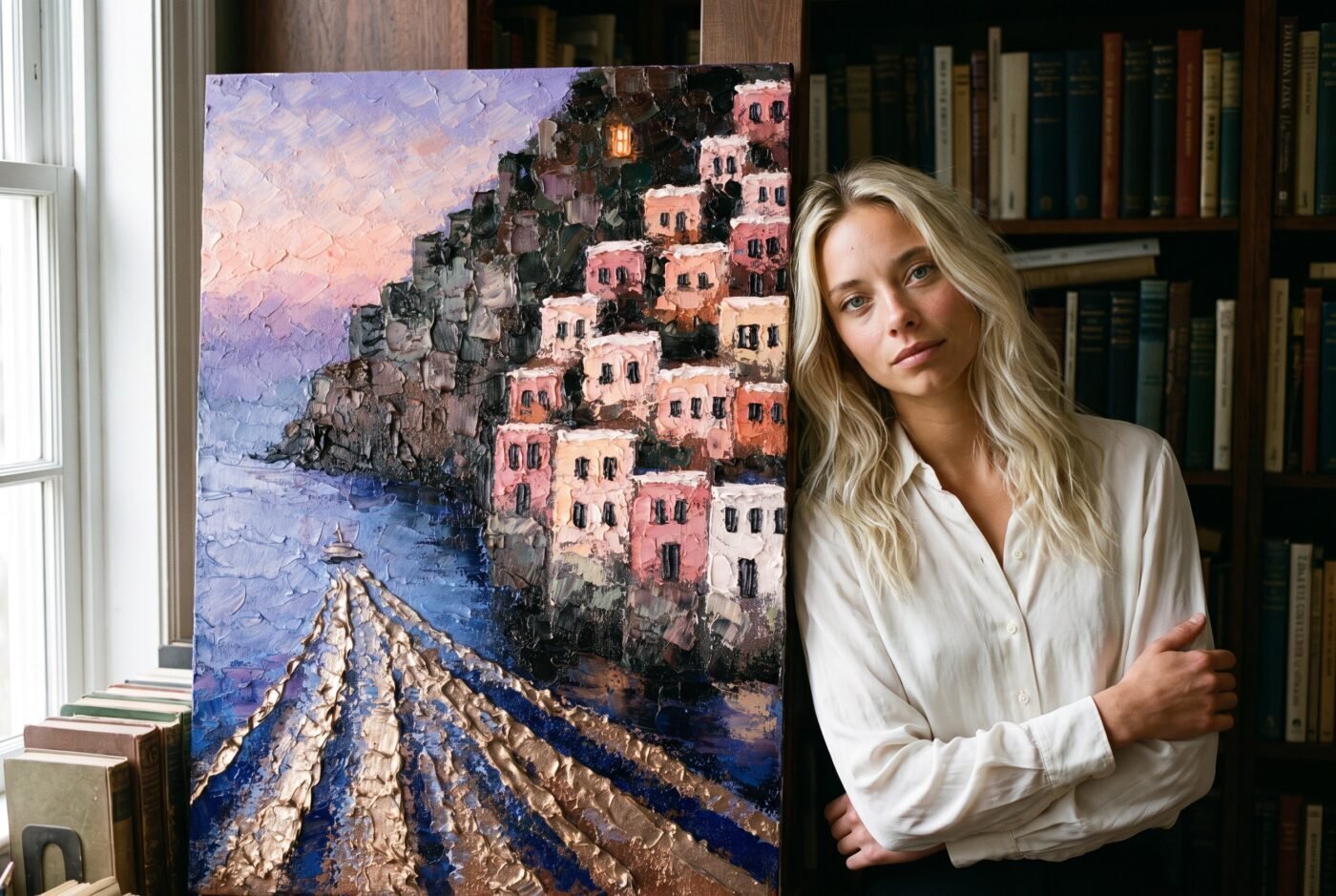
The lineage is Italian light over water, not palette knife in general
This descends from the tradition that noticed how Mediterranean harbour towns turn into stacked colour at dusk—the line that runs through late Monet’s Antibes work, then the Italian colorists between the wars who painted Portofino and Cinque Terre as pure chromatic architecture. Bellini is working that specific problem: terracotta and ochre rising in vertical slabs, warm masonry against cold water, the precise moment lamplight becomes warmer than sky.
What separates him from painters doing texture for texture’s sake is that every ridge of paint corresponds to a source of light or a plane catching it. The knife drags in the wake because that is how moving water fractures a reflection. The houses stack in horizontal bands because that is the grammar of those cliffs. He is not decorating. He is transcribing structure.
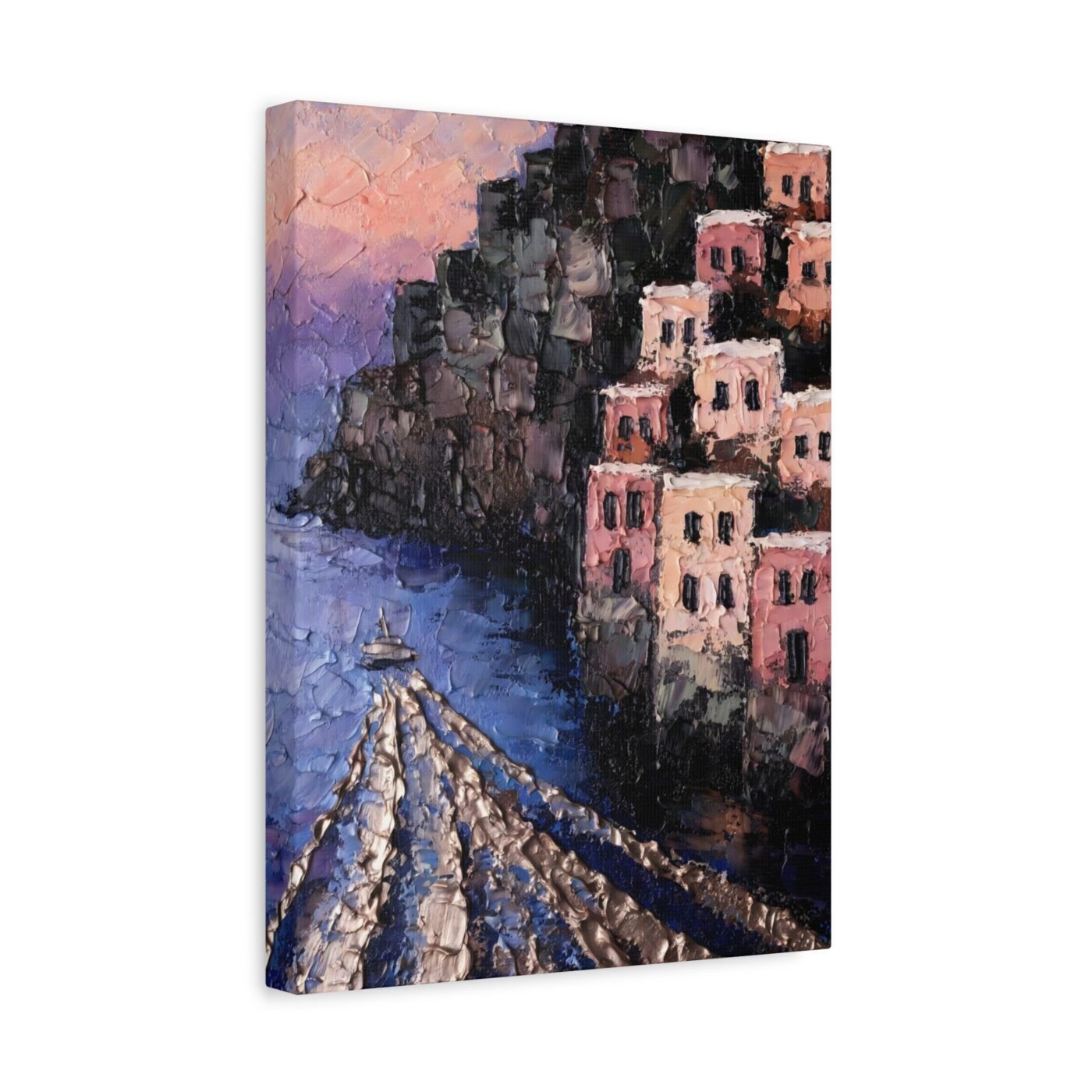
The practice is consistent enough to be a body of work
This is Bellini’s vocabulary by now: portrait-orientation harbour, houses climbing, one moving vessel, lamplight at the threshold between day and marine blue. Wake Turning Gold sits inside that discipline the way a sonnet sits inside its form—the constraints are what let you see the choices. Here he has given the entire lower third to water, which is unusual for him, and used it to pull the lamp colour down in a single golden seam. That is the decision that holds the piece.
Someone following Bellini’s work would recognise the vocabulary immediately and still find something new. That is what a practice looks like when it is not just repeating.
Movement earned
Bellini has done the thing that matters: he has made the same picture often enough that we can see him thinking inside it. The harbour at lamplight is now his subject the way Morandi’s bottles were a subject—not a scene he returns to but a problem he is solving in public, one knife-drag at a time. This piece demonstrates he knows what he is after and can reach it with consistency.
A painter working at this level of intentionality has earned the right to be called part of the Italian light lineage, which is a narrow and specific tradition worth belonging to.
Gallery-wrapped canvas, in 3 sizes — 12×16, 16×20, 18×24 in. Ships free within the continental US.