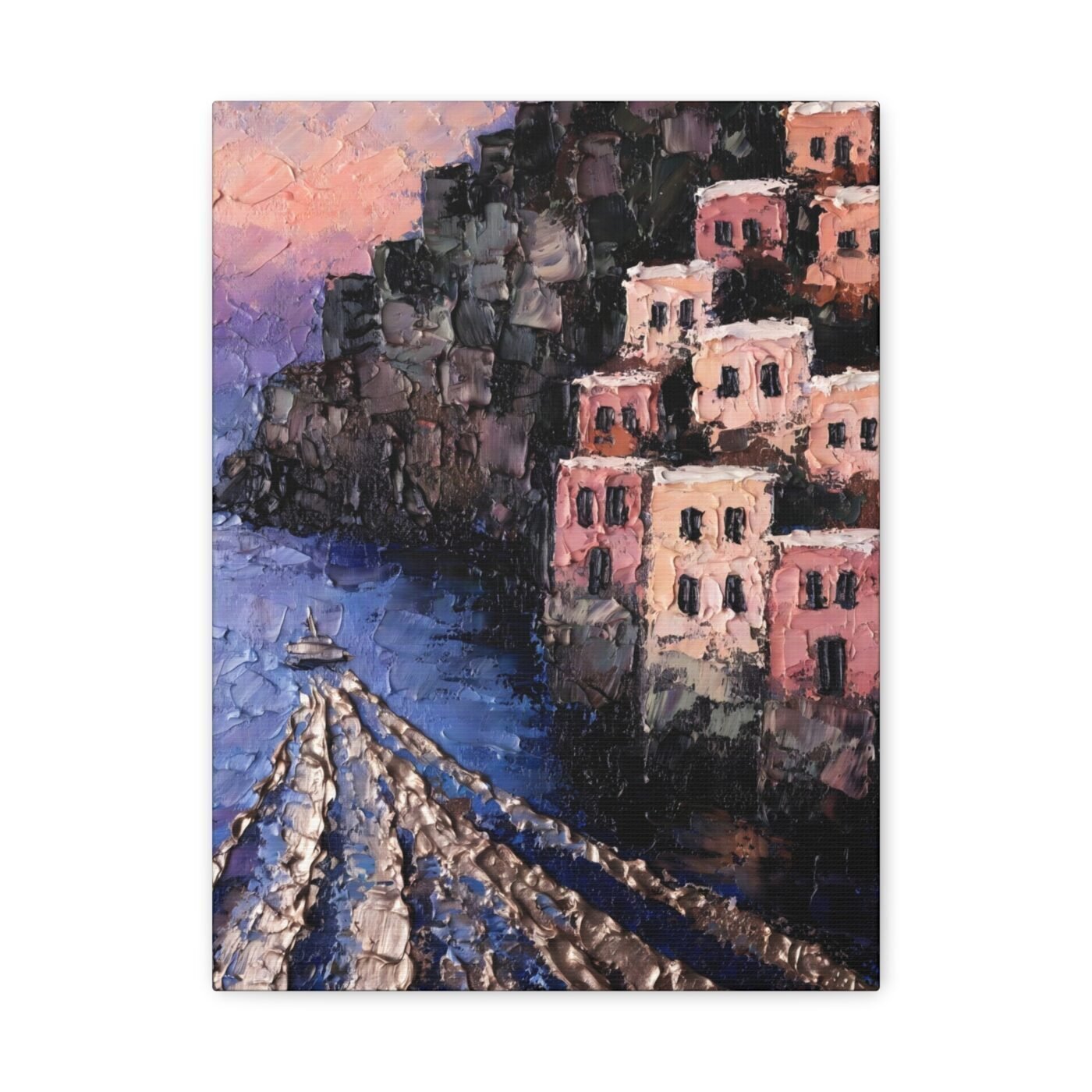
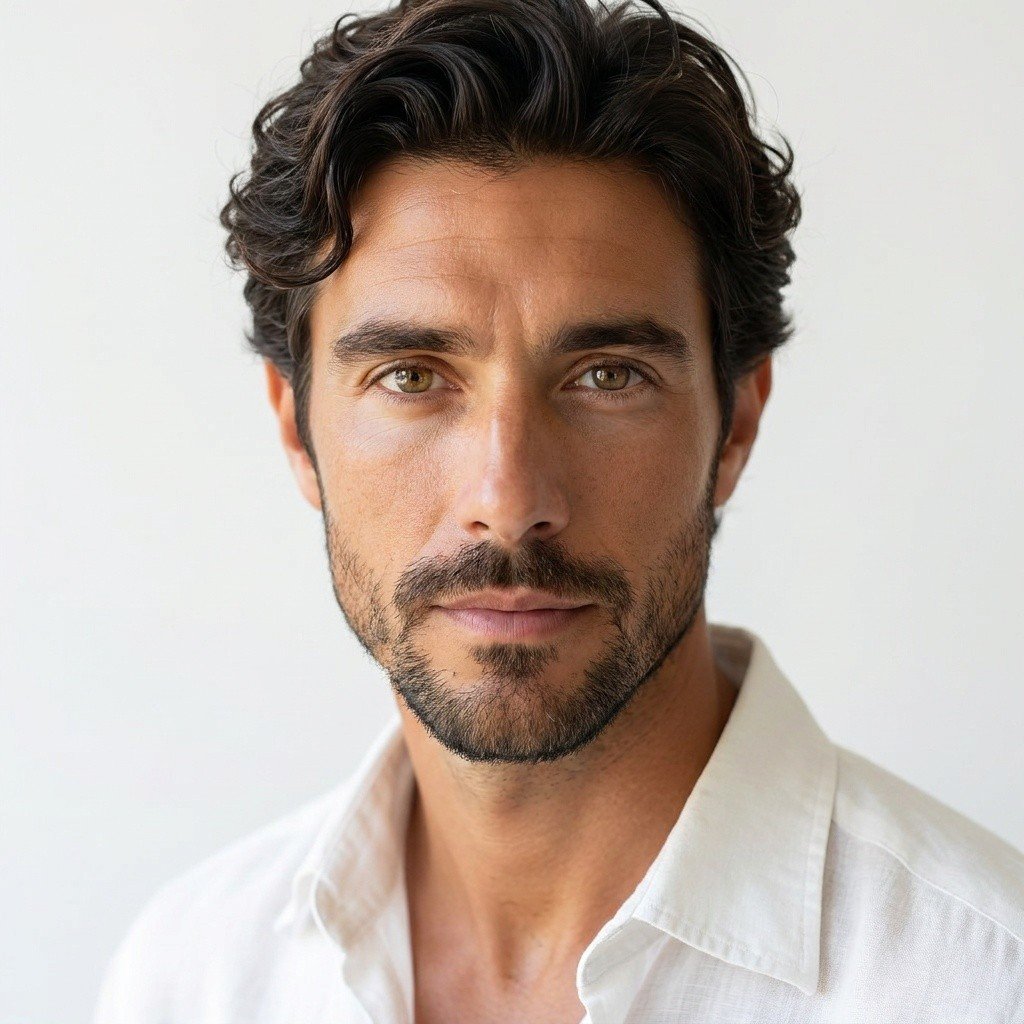
I am Marco Bellini and I paint harbour towns at the moment the lamps come on. I keep coming back to that narrow window when the water is still light enough to hold colour but the buildings have started glowing. This one is Positano, the last ferry pulling out.
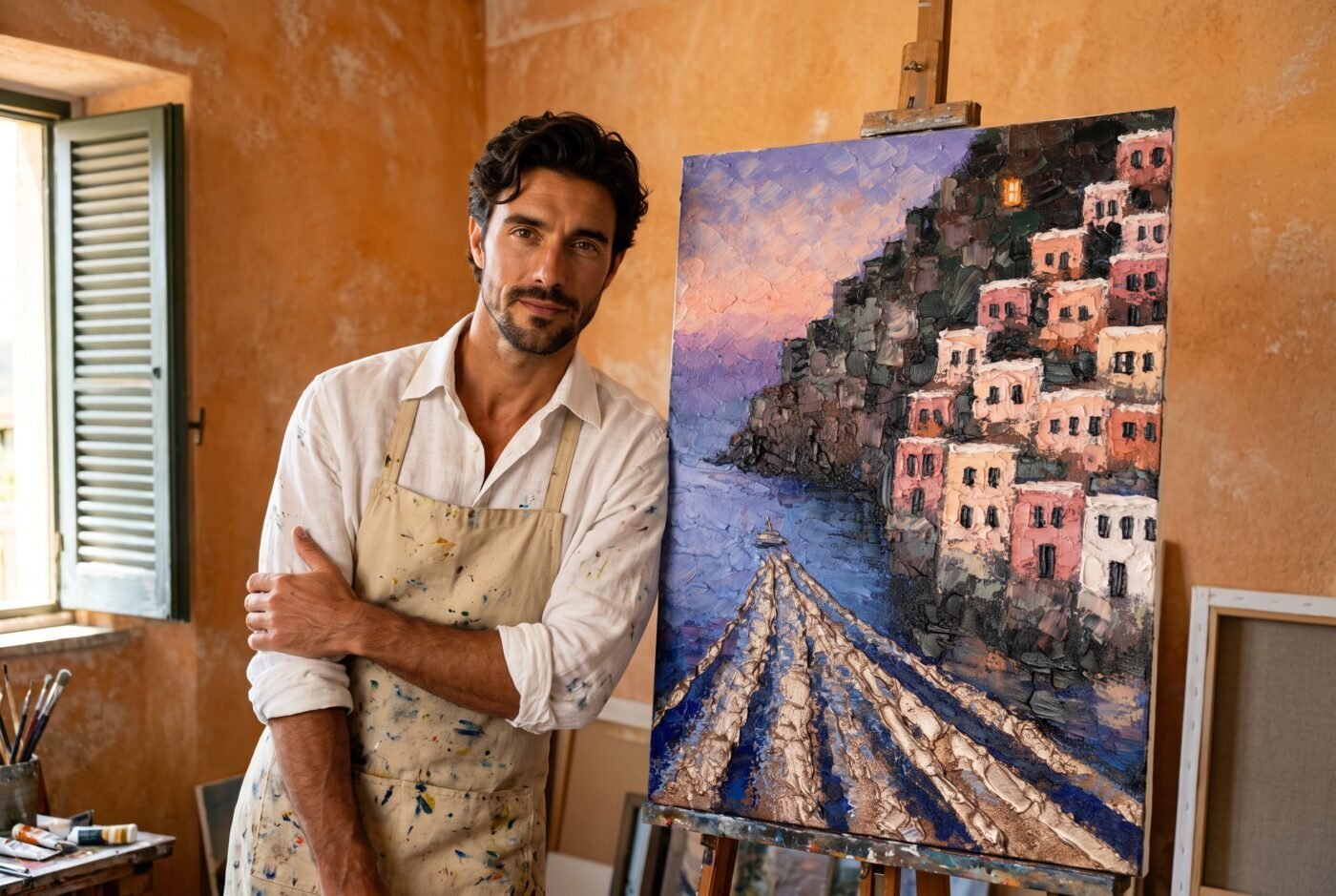
I wait for the buildings to light first
Tourists paint harbours in daylight because daylight is easy. I wait. The houses stacked up the cliff turn on their lights one by one, and twenty minutes later the water is dark enough that those orange squares start to register as warm against cold.
The wake cuts through that. It is still catching the sky, so it reads gold for about ten minutes before it goes grey. I am painting that ten minutes.
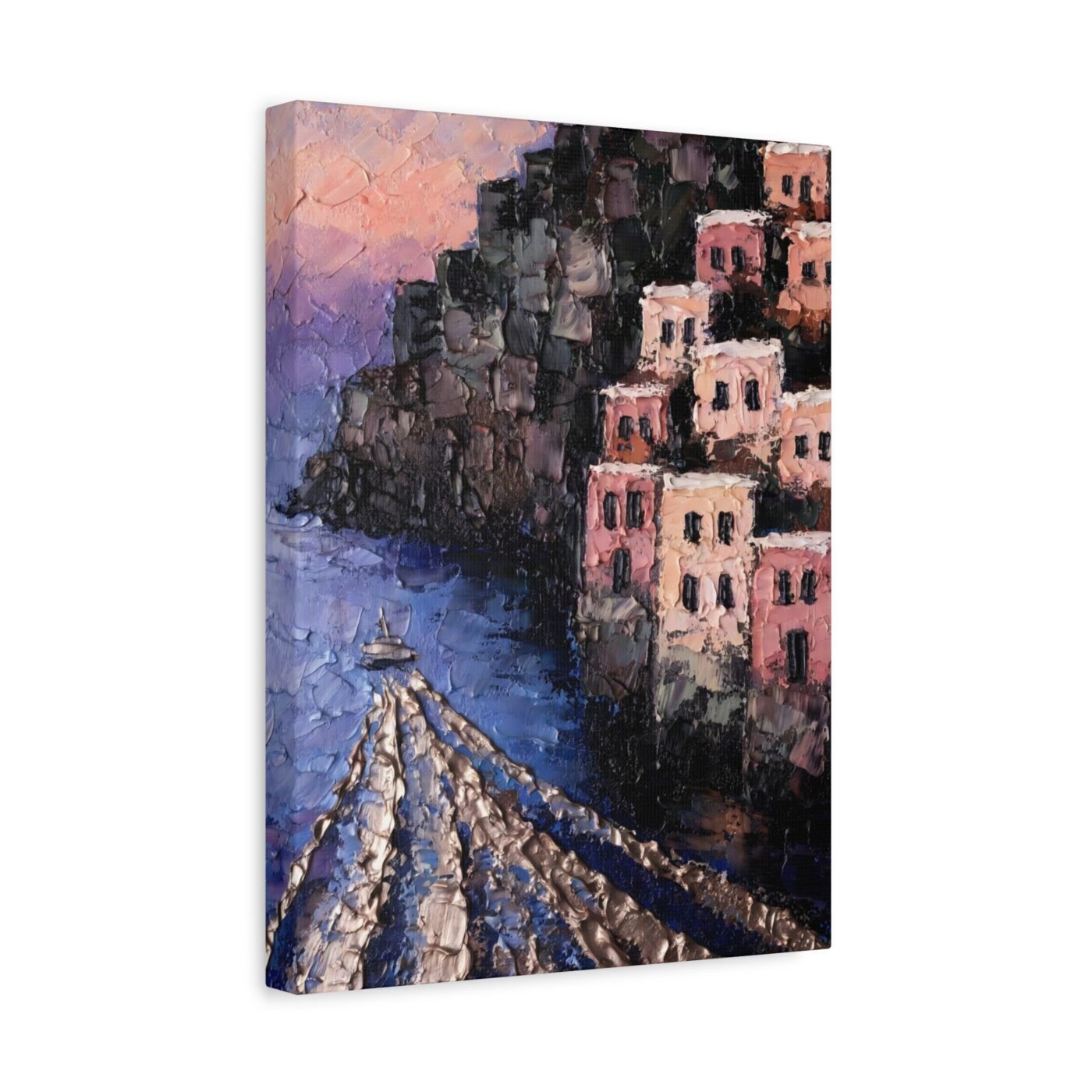
The knife leaves ridges the brush cannot
Ruby wrote that the knife work in the water makes the surface as much the subject as the scene, and that is exactly right. A brush would blend the lamp reflection into the wake. The palette knife drags them past each other, so you see two kinds of light in the same patch of paint.
I load the orange thick and pull it horizontal. The terracotta on the houses is dry pigment dragged over dry pigment until it looks like stucco. The water is the opposite: wet into wet, orange into blue, the ridge catching light where the paint is thickest. If you stood in front of the original, you would see the actual height difference between the wake and the flat water around it.
This is not the view tourists take home
They take home noon. They take home the Amalfi Coast with the sun overhead and the water flat blue. I take home six-forty, when the ferry is already moving and the cliff is in shadow but the wake is still gold.
This is for people who have stayed somewhere long enough to see it at the wrong time of day and realized that was the right time. If you want Positano as a postcard, this is not it.
Gallery-wrapped canvas, in 3 sizes — 12×16, 16×20, 18×24 in. Ships free within the continental US.