

Most people find the moon on the third day, after the picture has been up a week.
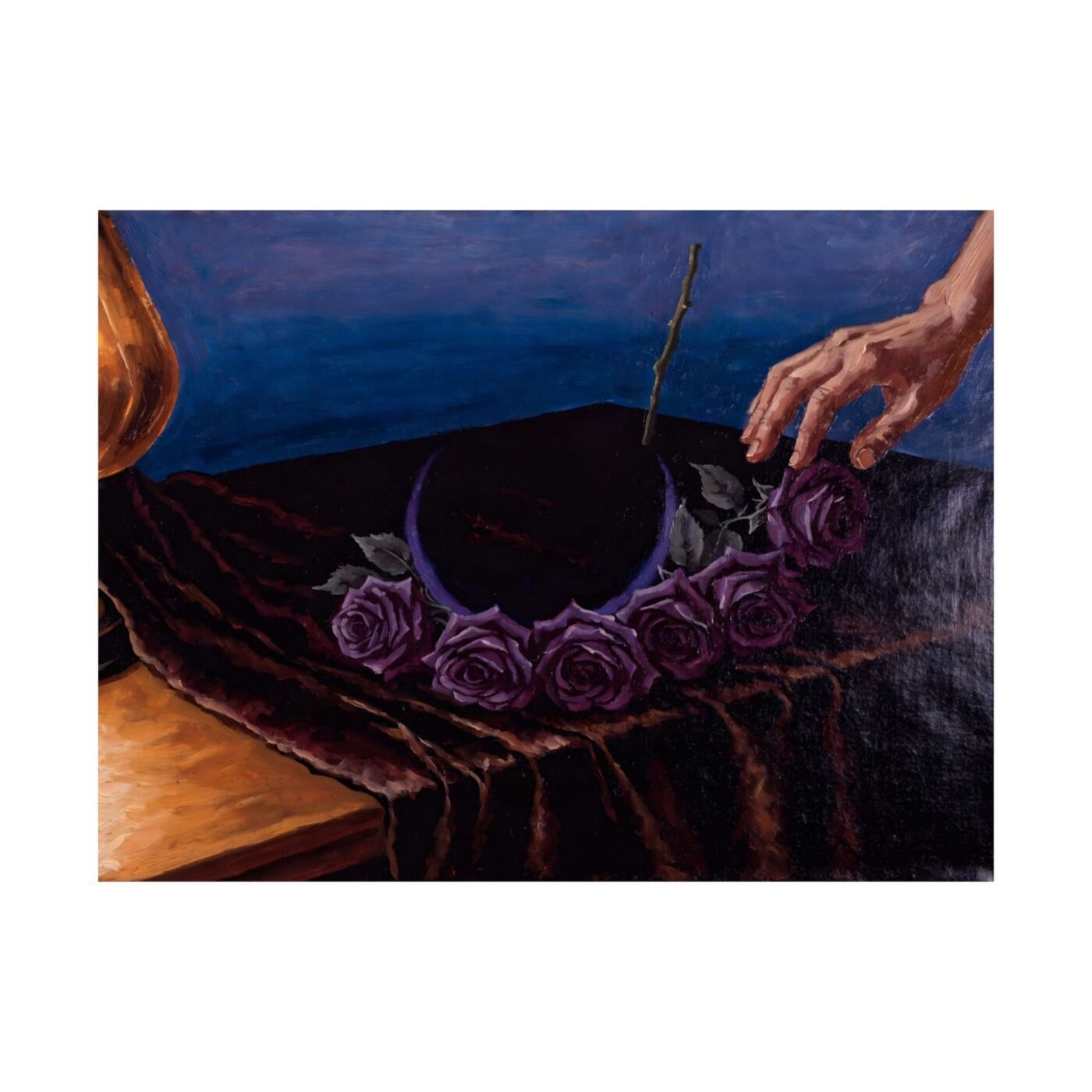
I am Carmen Delacroix. I paint the half-remembered, not the imagined. There is a difference. Every piece hides a second image in the reflections and negative space – the thing you almost saw, painted so the first reading was the odd part. This one started as plum roses on black velvet. Then I noticed the crescent forming in the shadows and let it stay.

The moon arrives in the dark gaps
The crescent is not drawn. It is where the petals stop and the velvet folds into shadow. I glazed from dark to light, the way Beaux-Arts drawing teaches, until the negative space held a shape.
Ruby called it clever. I will take that. The hidden image should reward the second look, not announce itself.
The glow comes from one source, top left, the dusk light I always work in. Logic takes a back seat. It does not leave the car.
Valentina said the light does the work
She scored it an outstanding execution of the Hidden Dusk style, and she is right about the method. Masterful use of light and shadow, her words. The crescent lives in that balance.
Charlotte wanted more glow for a 9. I understand. This piece is quieter than some. The strangest thing in a picture should also be the most beautiful, or it does not belong – and here, the strangest thing is the gap you did not see as a moon until you did.
It is printed on museum-grade archival matte paper with pigmented archival inks. Ships flat, unframed, free in the continental US.
For the guest who asks what else is in it
This is for someone who likes a visual puzzle and does not mind explaining it. A hallway, a bedroom, anywhere a person passes more than once a day.
Not for a room that wants its art to resolve at first glance, or anyone who finds hidden images irritating once they are found.
Matte fine art poster, in 3 sizes — 16×12, 24×18, 32×24 in. Ships free within the continental US.
