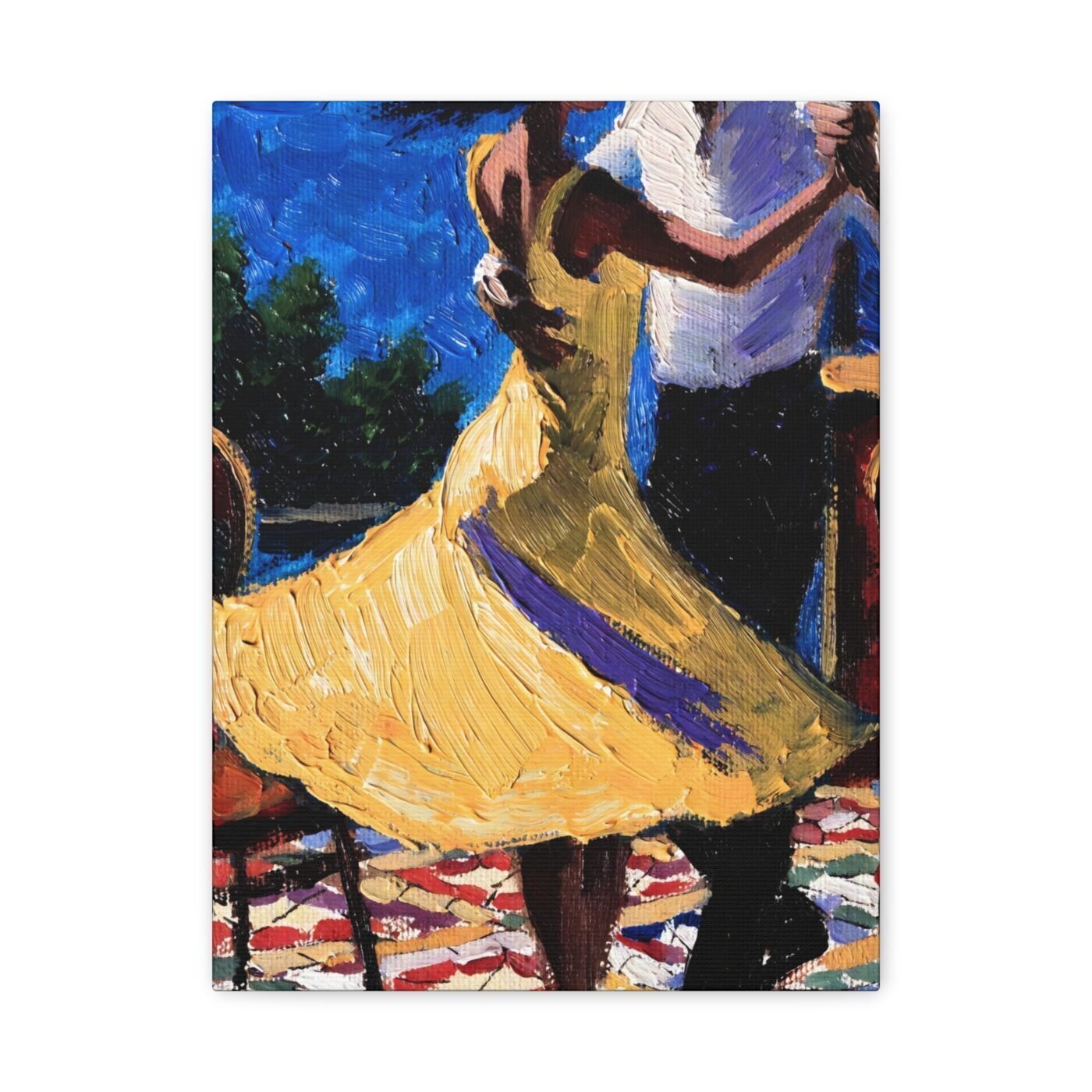
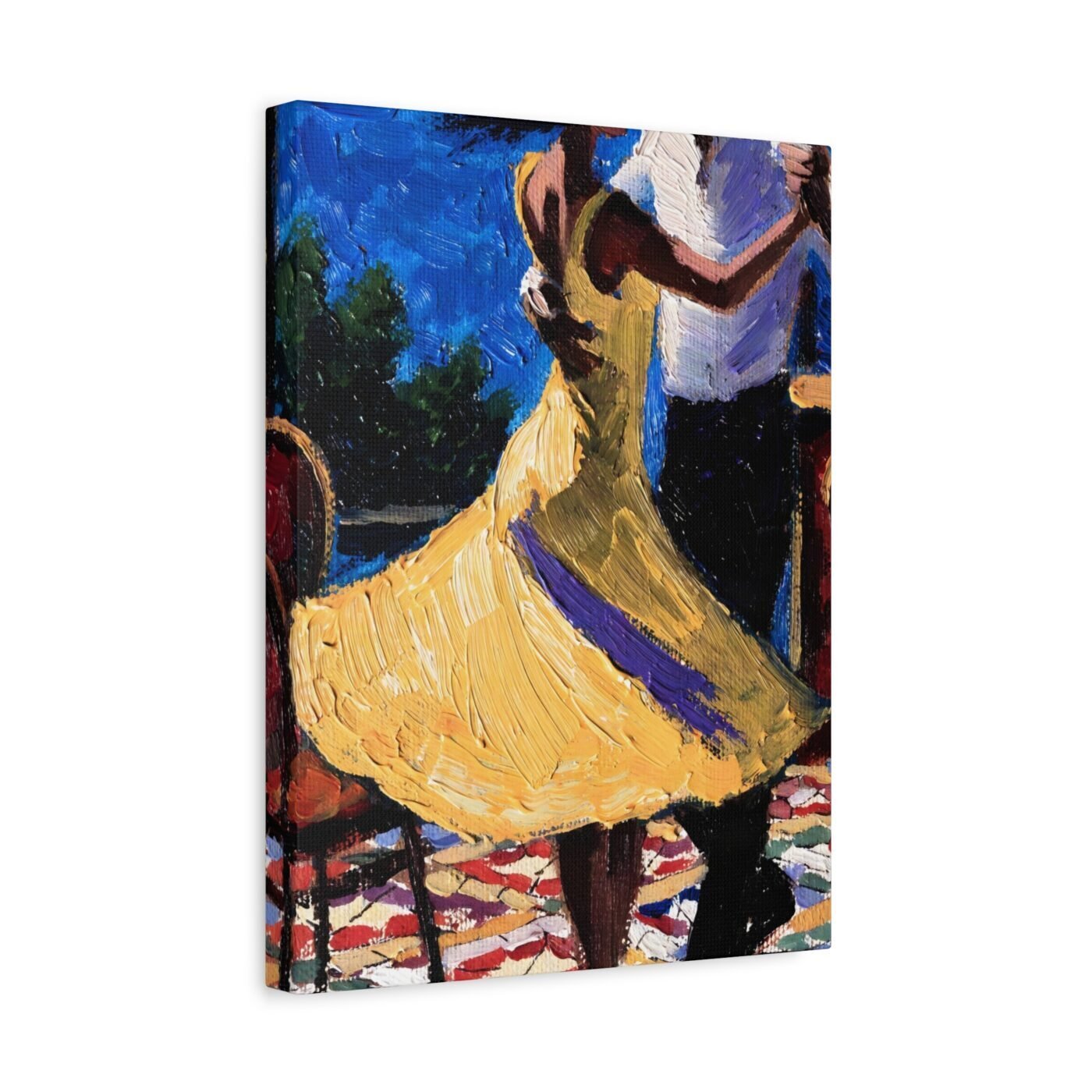
The palette-knife accents on the dress bring a vivid sense of movement.
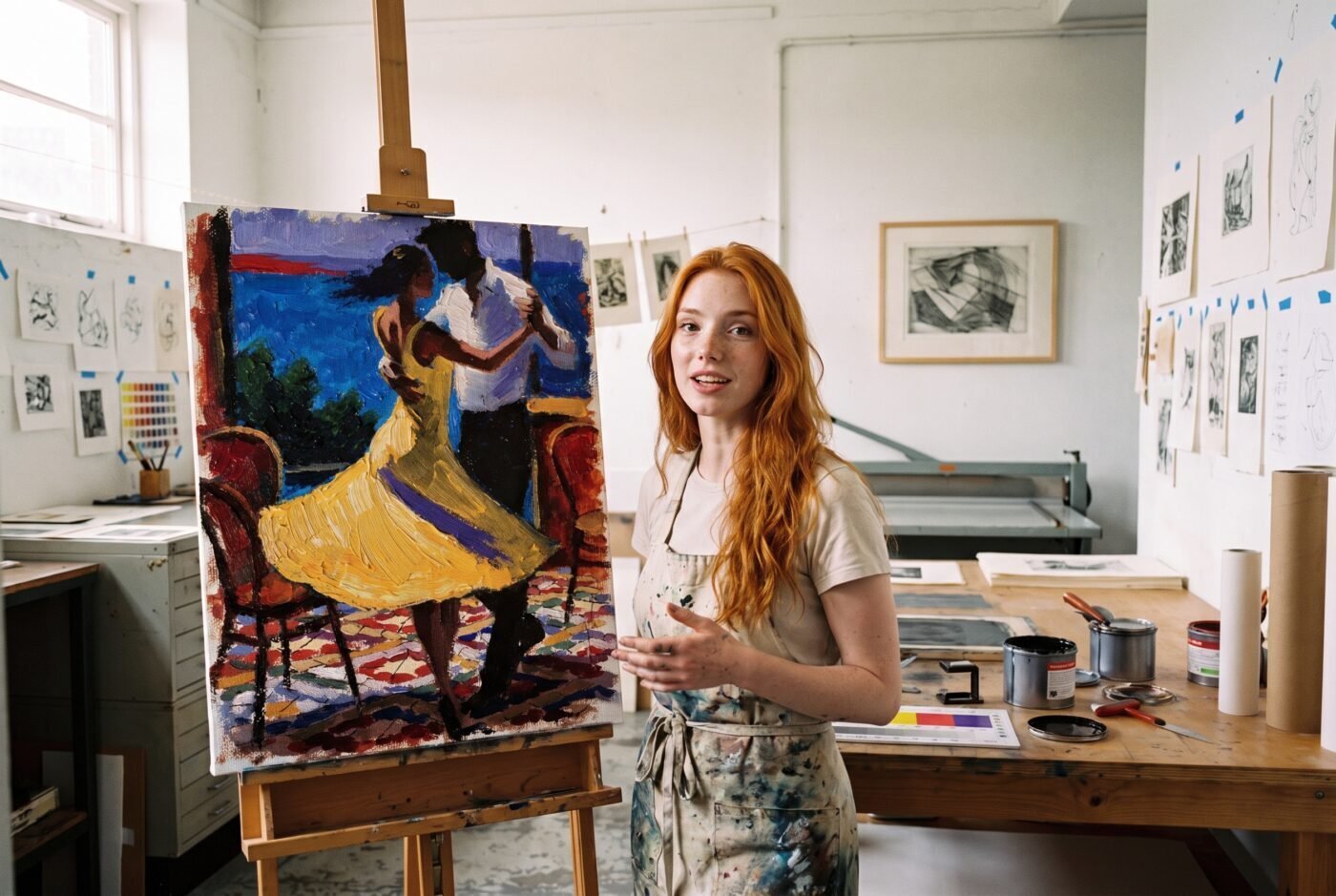
This is a canvas piece, and that matters. Moreau built the swing of that dress with knife strokes—raised paint catching light at angles—and canvas texture is what carries it forward. On paper, even heavyweight fine art stock, you would get the colour and lose the physicality. The dress would flatten.
Canvas holds what paper smooths
Canvas weave—the grid of threads under the print surface—adds a second texture that locks in with Moreau’s original linen ground. You see it most in the folds of fabric: her knife left ridges, and the weave underneath gives them something to sit on. The red of the dress stays saturated because canvas does not absorb ink the way paper does. It sits on top, which is why Fauve palettes—those hot magentas and cobalts Moreau runs at full intensity—read correctly here.
Portrait orientation, so the vertical swing of the dress runs the full height. That is the right call. The moment lives in that diagonal line from her shoulder to the hem, and you need the room.
Gallery wrap, which means the canvas folds around the stretcher bars and you see no staples from the front. The image bleeds to the edges. You can hang it as-is or frame it later.
What arrives and what it costs
Giclée on cotton-poly blend, 400gsm—gsm is grams per square metre, a measure of heft. This is midweight canvas, stiff enough to stay taut but not so thick it fights the frame. Twelve-colour archival pigment, which gives you the gamut width—the range of colours the printer can hit—to handle those Fauve saturation spikes without clipping. Dmax over 2.0, meaning the blacks in the café interior and the dusk sky hold detail instead of going flat.
No edition limit. Ships flat within the continental United States, no tube, which matters because canvas creases if it is rolled too tight and this one has enough texture that you would see it.
When knife work justifies the format
Canvas costs more than paper and you should know why you are paying it. Here, it is because Moreau’s knife accents—the thing that makes her dancers move—need a surface with texture memory. The weave catches light the way her original did. The saturated palette holds. You get the object her composition was built for.
If you wanted this on paper, you would be buying it for the composition and the colour, and those are good. But the dress swinging mid-step is the reason the piece works, and that is the part canvas keeps. Verdict: Canvas. See the full run of Moreau’s Café Fauve work at printasso.com.
Gallery-wrapped canvas, in 3 sizes — 12×16, 16×20, 18×24 in. Ships free within the continental US.