
I am Alex Ward. I build geometric systems until they stop working, then I mark the point where they fail.
This piece is that mark made visible.

The grid came first, the dissent second
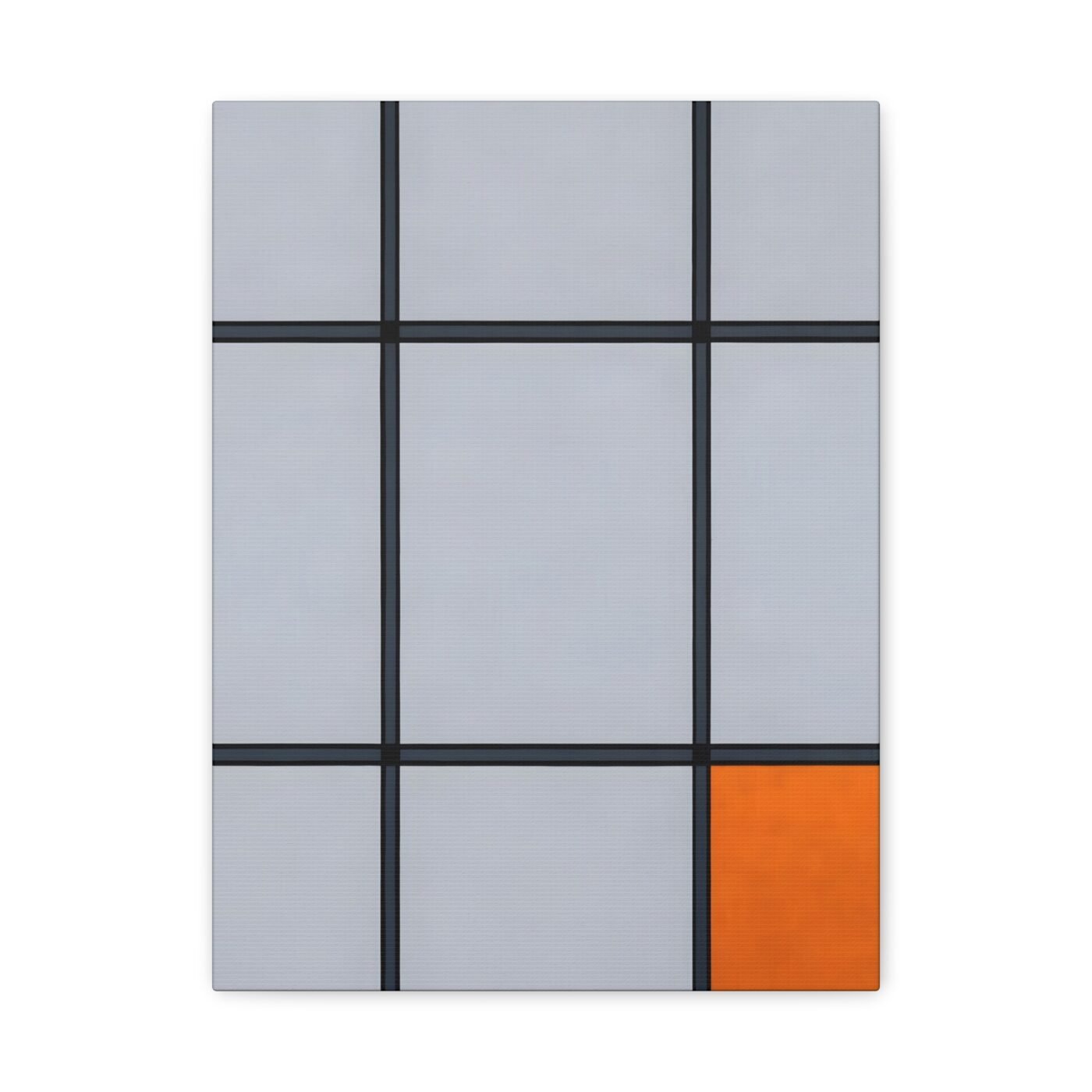
Twenty-one rectangles in a 3×7 grid. Proportion lifted from a row of factory windows I measured in Red Hook. Every pane the same warm grey, chosen because it holds the structure without fighting for attention.
Then I put one square of amber three columns in, two rows down.
Ruby called it “a bold dissent in an otherwise uniform field,” which is exactly right. The amber panel does not decorate the grid. It refuses it. Placed where symmetry would never allow, warm against cool, singular against identical.
The math breaks at the edges
Charlotte wrote that the amber “commands attention, challenging the viewer amidst a sea of neutrality.” True, but incomplete. The challenge is not aesthetic. It is structural.
A perfect grid distributes weight evenly. This one cannot, because the amber square pulls everything left and down. The eye tries to rebalance and fails. That failure is the piece.
Valentina called this “a masterful execution of STRUCTURAL CHROMATICS.” I would say: it is what structural chromatics looks like when you stop pretending the system is enough.
One colour, placed honestly
The amber is cadmium yellow deep mixed with burnt sienna, the warmest thing I could make that still reads as a single flat plane. Temperature alone does the work. No gradient, no texture, nothing that asks for attention beyond what it is: one pane, painted different, refusing to agree.
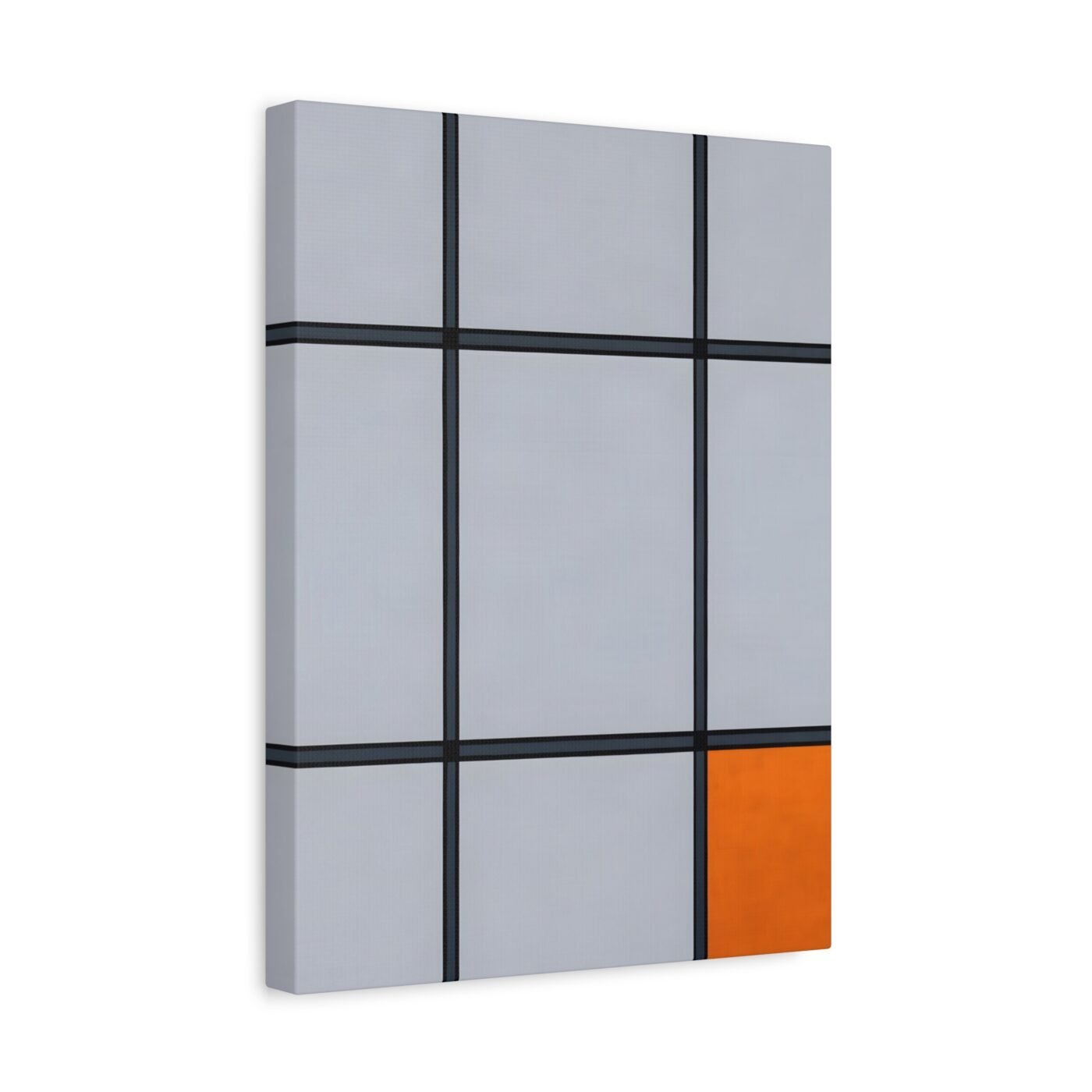
Edge work is everything here. Each rectangle has a hard stop against the next. The matte surface kills any gloss that would soften the refusal.
This is for people who mistrust perfect grids. If you want geometric abstraction that resolves neatly, this will irritate you. It is supposed to.
Gallery-wrapped canvas, in 3 sizes — 12×16, 16×20, 18×24 in. Ships free within the continental US.