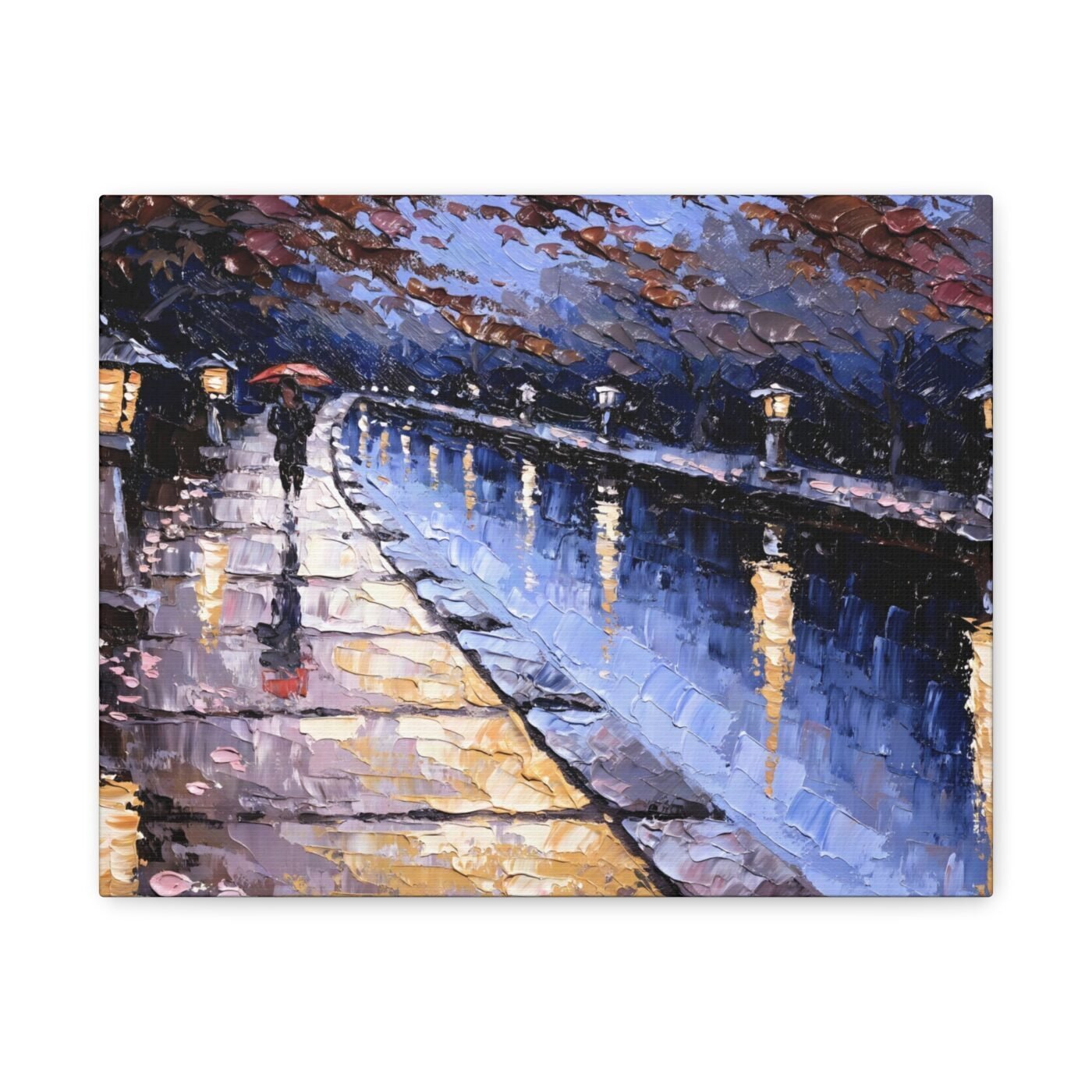

You feel the knife before you see the rain.
Tanaka works wet stone and canal water with a palette knife, and that sculptural texture is the piece. Paper flattens it. Canvas holds it – the weave catches light the way raised pigment does, so the lantern reflections read as built, not printed.
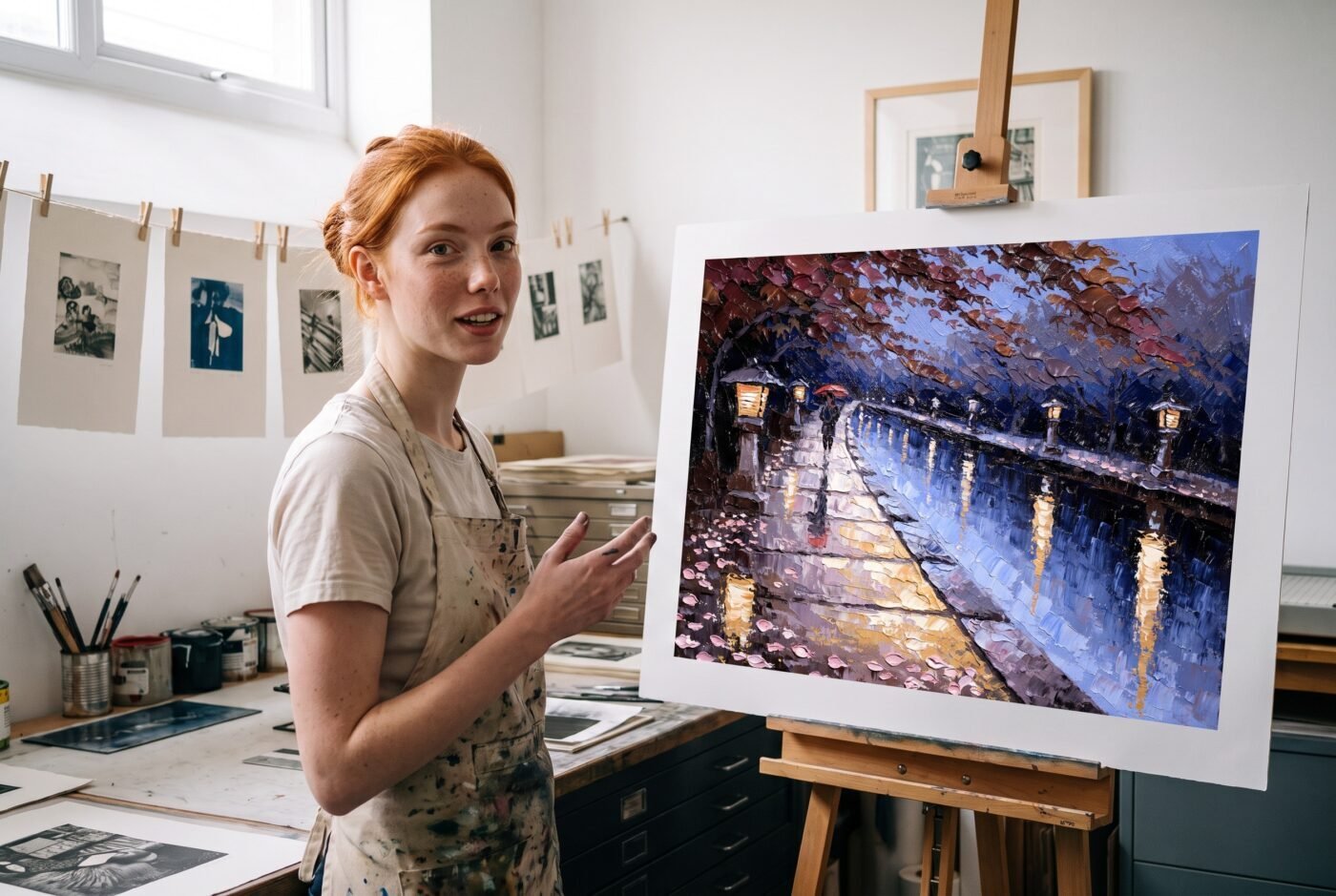
What arrives: 16×24 gallery wrap on 1.5-inch stretcher bars
Gallery wrap means the image continues around the edges – no white margin, no frame gap. The bars are thick enough that the canvas sits off the wall by an inch and a half, which matters here because it lets you see the texture in raking light.
The canvas is a cotton and polyester composite with a matte coating, stretched on a radiata pine frame. It arrives taut, with the hanging hardware already on the back and rubber bumpers on the bottom corners.
Indigo and plum in the wet stone, warm gold in the lanterns, and the reflections doubled below in choppy knife strokes. The ink holds the darks without going flat – dmax, the darkest black the printer can hit, is deep enough that the umbrella at the end of the path stays a silhouette even in bright room light.
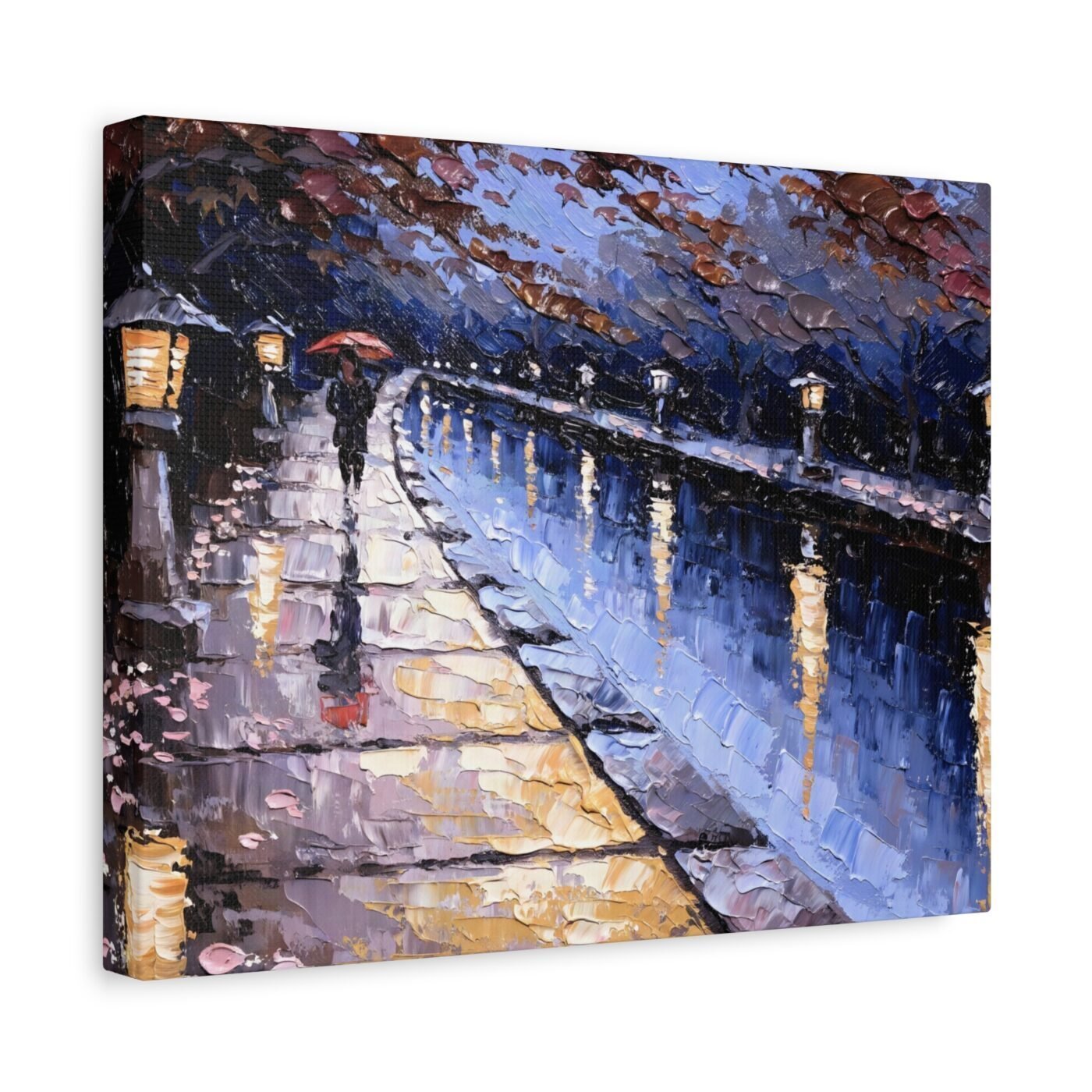
The texture reads as intentional, not artifacted
Tanaka’s knife work translates because the canvas texture scales with it. You see ridges in the reflection, not printer grain. That only works if the resolution is high enough – the master is 300 dpi at print size, and the matte coating on the canvas holds the plum-to-indigo gradient without banding.
One thing: the gold in the lanterns is warm but not metallic. If you are expecting foil or shimmer, this is pigment only. It glows by contrast, not by reflection.
Verdict: Canvas
The knife texture is the piece, and canvas is the only format that lets it land. Paper would smooth it, a frame would box it in. This wants to sit proud of the wall in a room with side light, where the weave and the painted ridges work together. See the full specs and sizing here.
Gallery-wrapped canvas, in 3 sizes — 14×11, 20×16, 24×18 in. Ships free within the continental US.