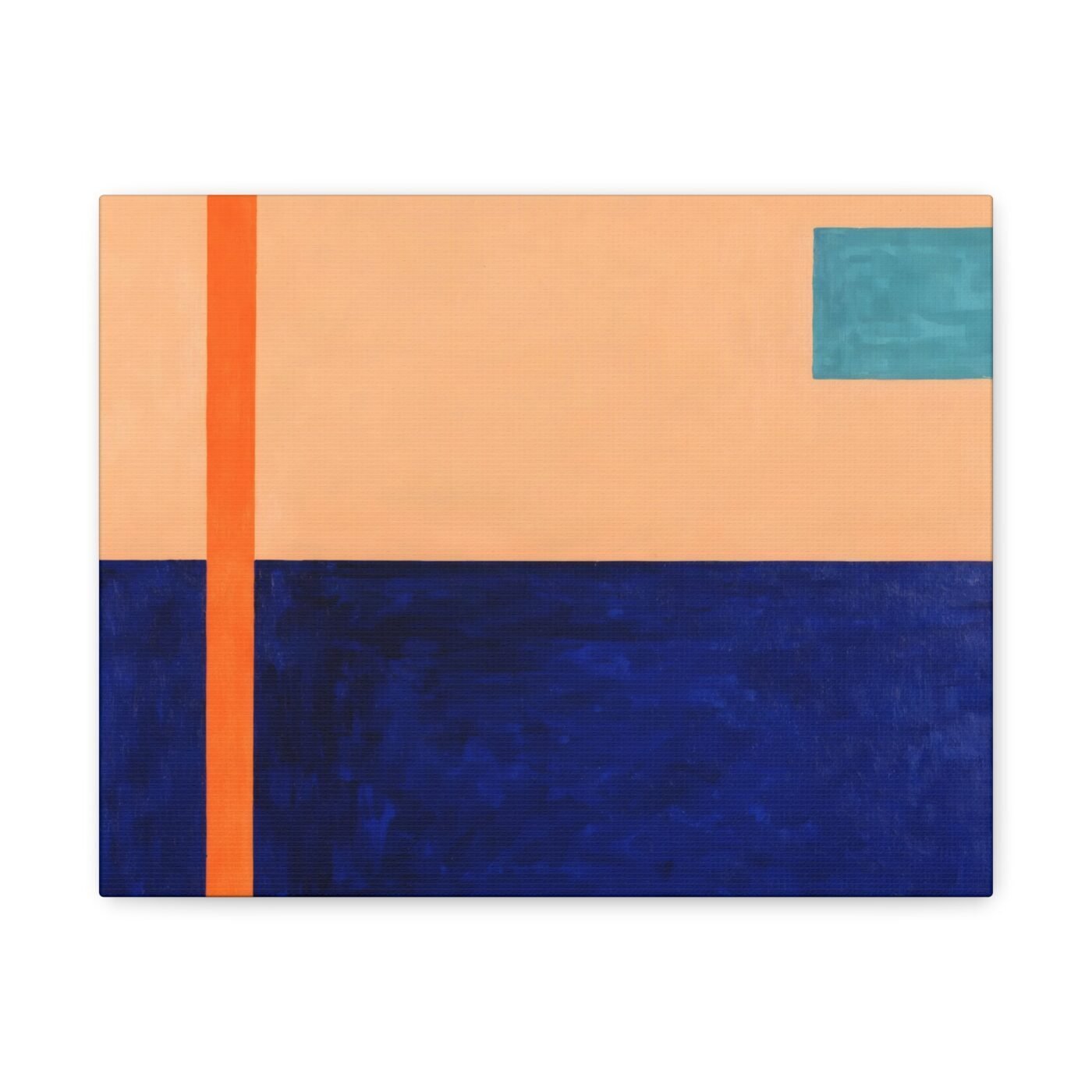

I am Alex Ward and I spend most of my time trying to make structure visible without announcing it. This one started as a study in how much information you can strip out before a system stops reading as a system. The blocks follow a proportional sequence, but I left the logic just unclear enough that you feel it before you see it.
Charlotte said it doesn’t command a second glance. Fair. It is not trying to. It is trying to hold the third and fourth glance, once you notice the intervals are doing something the shapes are not.

The gaps are load-bearing
Hard-edge work lives and dies on where things stop. I set the blocks first, then spent longer on the negative space than I did on the colour. The white does not sit behind the geometry—it pushes back against it.
Ruby called that tension. I would call it the grid refusing to settle. You can measure the intervals and they will track to a rule, but the eye reads them as slightly off. That gap between what you measure and what you see is where the piece actually lives.
Matte surface, no incident
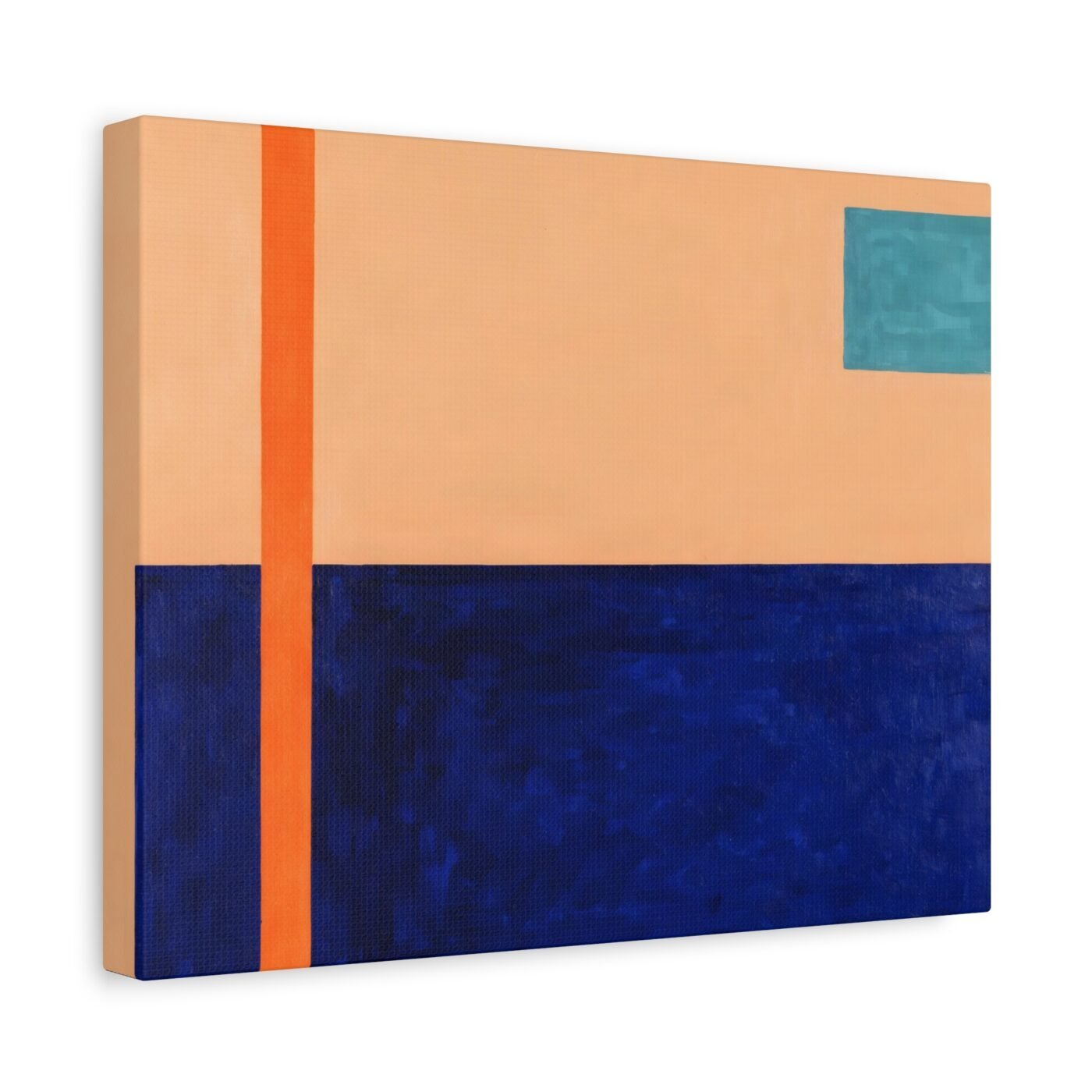
I work flat and I work matte because shine implies depth and depth implies atmosphere. This is not atmospheric. The edges are drawn, not painted. No incident, no gesture, nothing for the eye to catch on except the structure itself.
Valentina called the execution masterful, which I will take. The proportions are not intuitive and getting them to balance without symmetry took more iterations than I kept count of.
It builds left to right, then stops
The composition runs in one direction and then ends before it resolves. That is deliberate. If it closed the loop it would read as complete, and complete means you are done looking. This holds just enough information back that your brain keeps trying to solve it.
This is for people who like work that does not explain itself upfront. If you want something that announces what it is from across the room, this will read as withheld. If you are willing to sit with a piece that only makes sense after the fourth pass, it will keep making sense in new ways.
See Interval Proving Structure →
Gallery-wrapped canvas, in 3 sizes — 14×11, 20×16, 24×18 in. Ships free within the continental US.