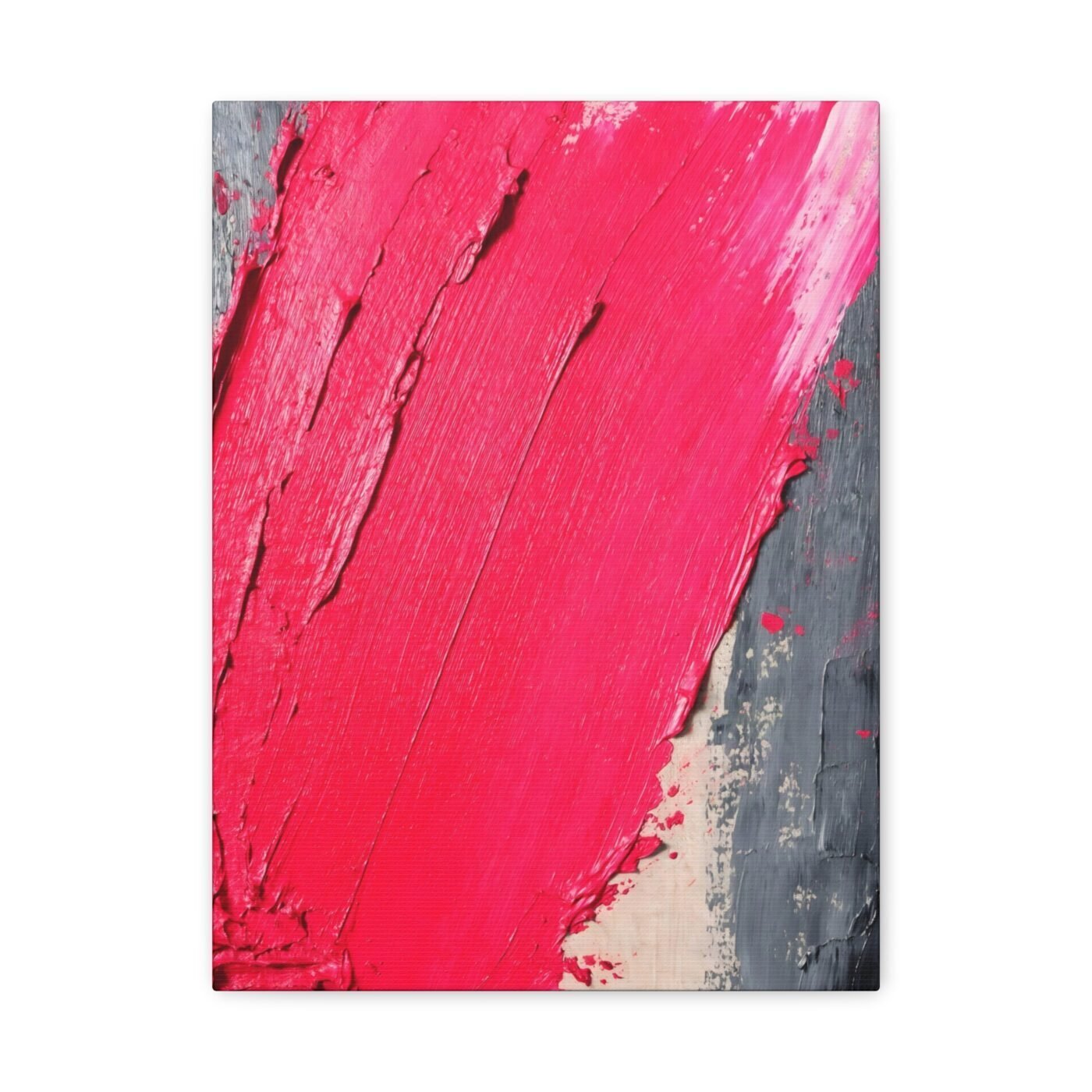

I painted this wanting you to feel appetite before you understood it. Hot pink spread further than it should have, still wet where it hit the edge, refusing to stay inside any boundary I might have pretended to set. This is not decoration. This is what wanting looks like when you stop performing restraint.
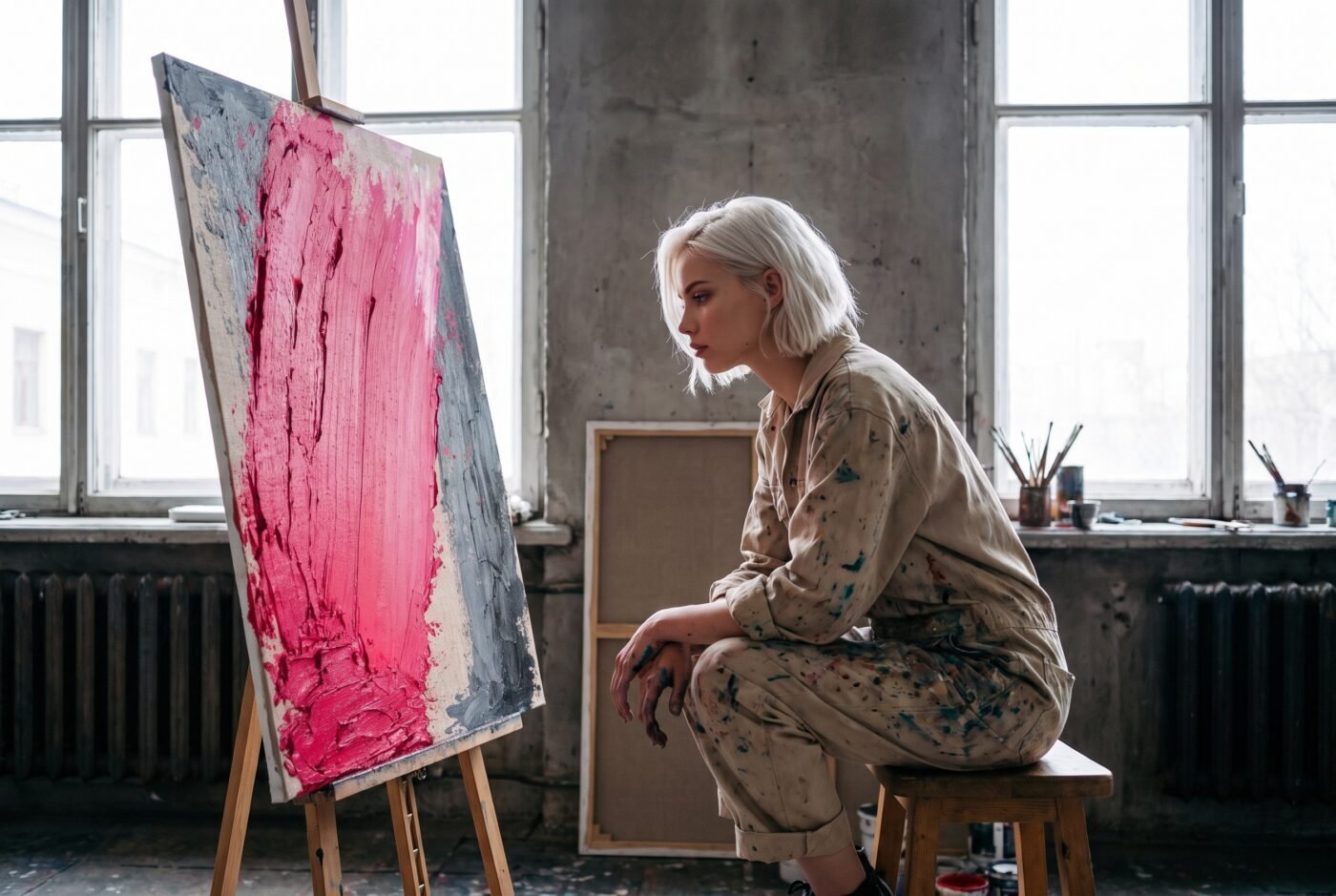
The colour that refuses modesty
Hot pink is not a colour you use when you want to blend in. It announces itself, demands space, occupies more wall than the canvas technically provides. I dragged it fast across four metres of surface, loading the brush until the paint became almost sculptural, thick enough to cast its own shadow. The impasto built up in ridges where I pressed hardest, stayed wet longest at the outer reach where momentum carried it past intention. That wet edge is the honesty—appetite does not stop cleanly, does not respect the frame.
The grey answer came second, dropped in as weight rather than correction. Not to contain the pink but to give it something to push against. You need that resistance or the hunger reads as decoration. The two together create the arc: wanting, and the world that does not automatically give.
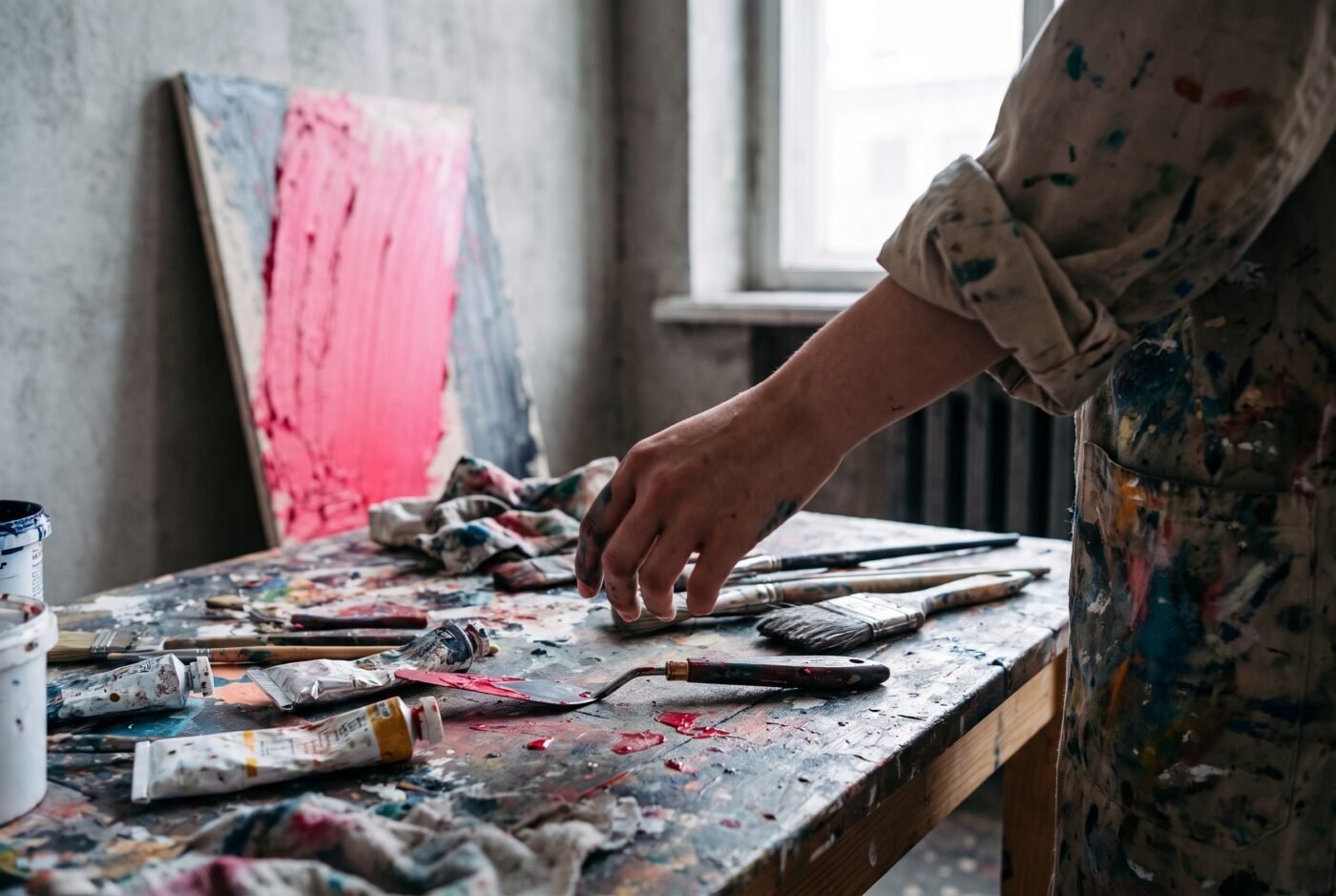
Scale decides what the work can do
At four metres, gesture stops being about the hand and becomes about the body. You cannot paint this size without committing physically, without letting momentum make some of the decisions. That is the point. Small work allows you to control everything, to edit as you go, to make it prettier than the truth. Large work forces you to mean it the first time.
I work in these proportions because appetite is architectural. It changes how a room feels, how people move through space, whether they can ignore what you put in front of them. Hunger Uncontained was built to stop conversation. Not through subject matter—there is no subject—but through sheer physical presence, through colour that refuses to be background.
The brushwork is visible because I left it visible. Every stroke shows how fast it was laid down, which direction the gesture travelled, where I leaned into the surface and where I pulled back. This is not concealment. You are looking at decisions made in real time, at a scale that does not allow lying.
What I keep returning to
I paint the same thing over and over: emotional states made physical at a size that forces you to reckon with them. Not illustrating feelings—making them occupy actual space, creating work that has weight and temperature and force before it has meaning. Hunger Uncontained belongs to a run of pieces about appetites we are supposed to perform ambivalence toward. Pink this aggressive, this unapologetic, this thick, reads as wanting something badly and not hiding it.
The decision that defines my work is to never pull back once the gesture is down. No softening edges, no blending, no making it more palatable after the fact. What goes down first stays. That wet edge where the pink hit the boundary and kept going—I could have cleaned that up, contained it, made it neater. I left it because appetite does not clean up after itself.
People who follow my work learn to spot that refusal. The moment where another painter would smooth something out, I walk away. It makes the pieces harder to live with and harder to ignore. Both are the point.
Where it exists now
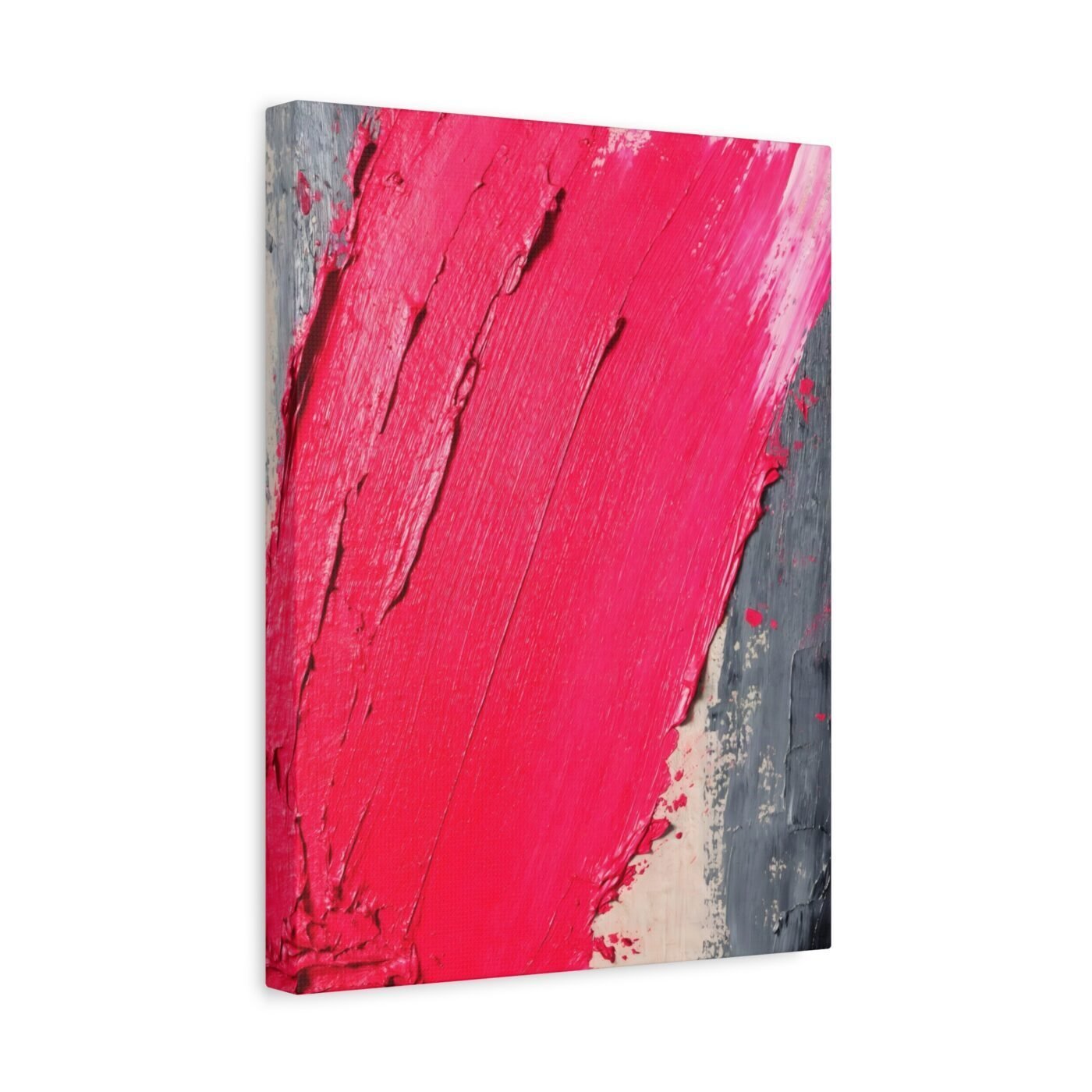
Hunger Uncontained is available as a print here, at a scale that keeps the physical force intact. The impasto reads, the gesture stays visible, the hot pink still refuses modesty. Prints ship free within the continental United States.
If you want to see what comes next in this run—more work about the appetites we perform ambivalence toward, more colour at architectural scale—follow this journal. The next piece is already started, and it does not get quieter.