
Impasto on paper flattens. On canvas it stays.
What the knife work actually does
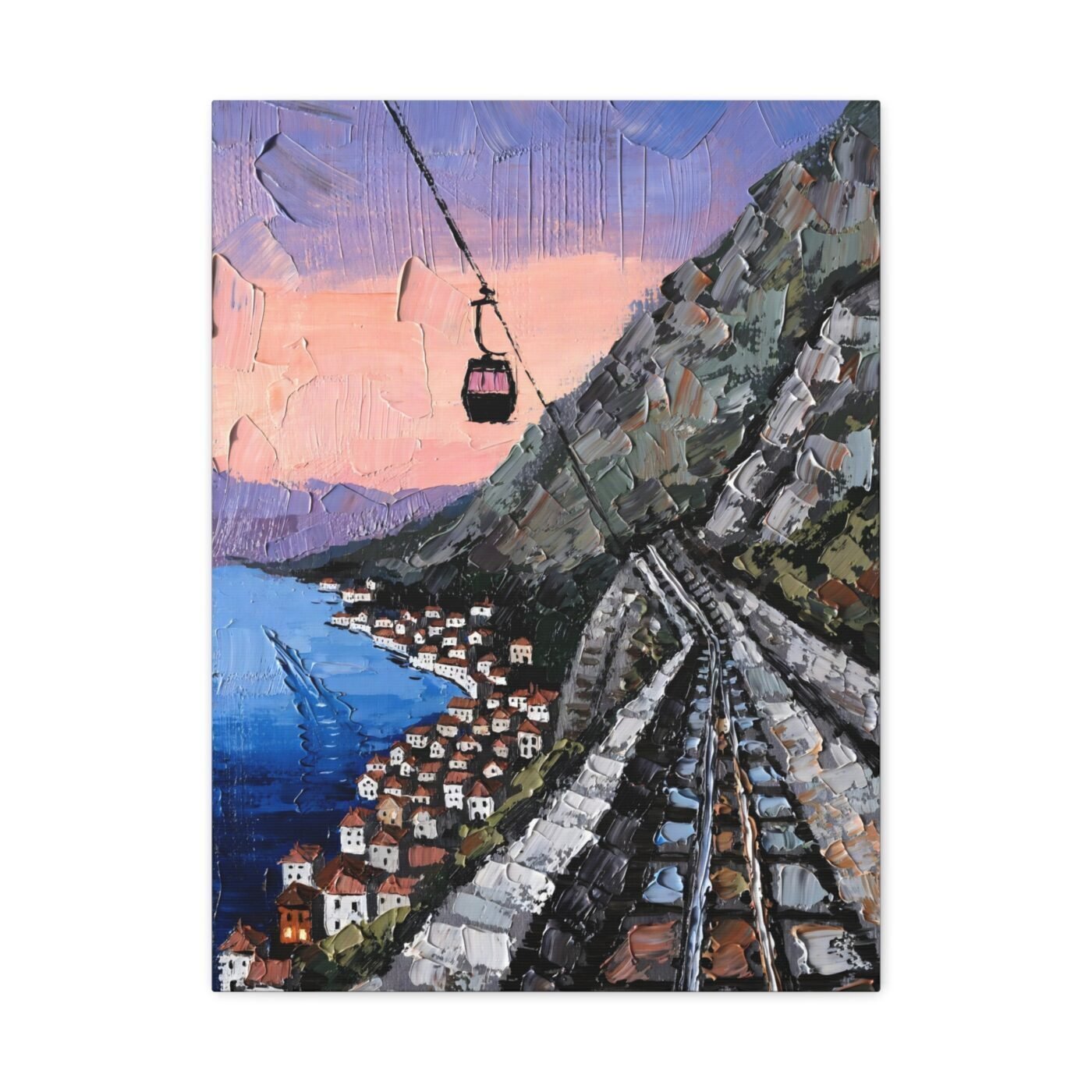
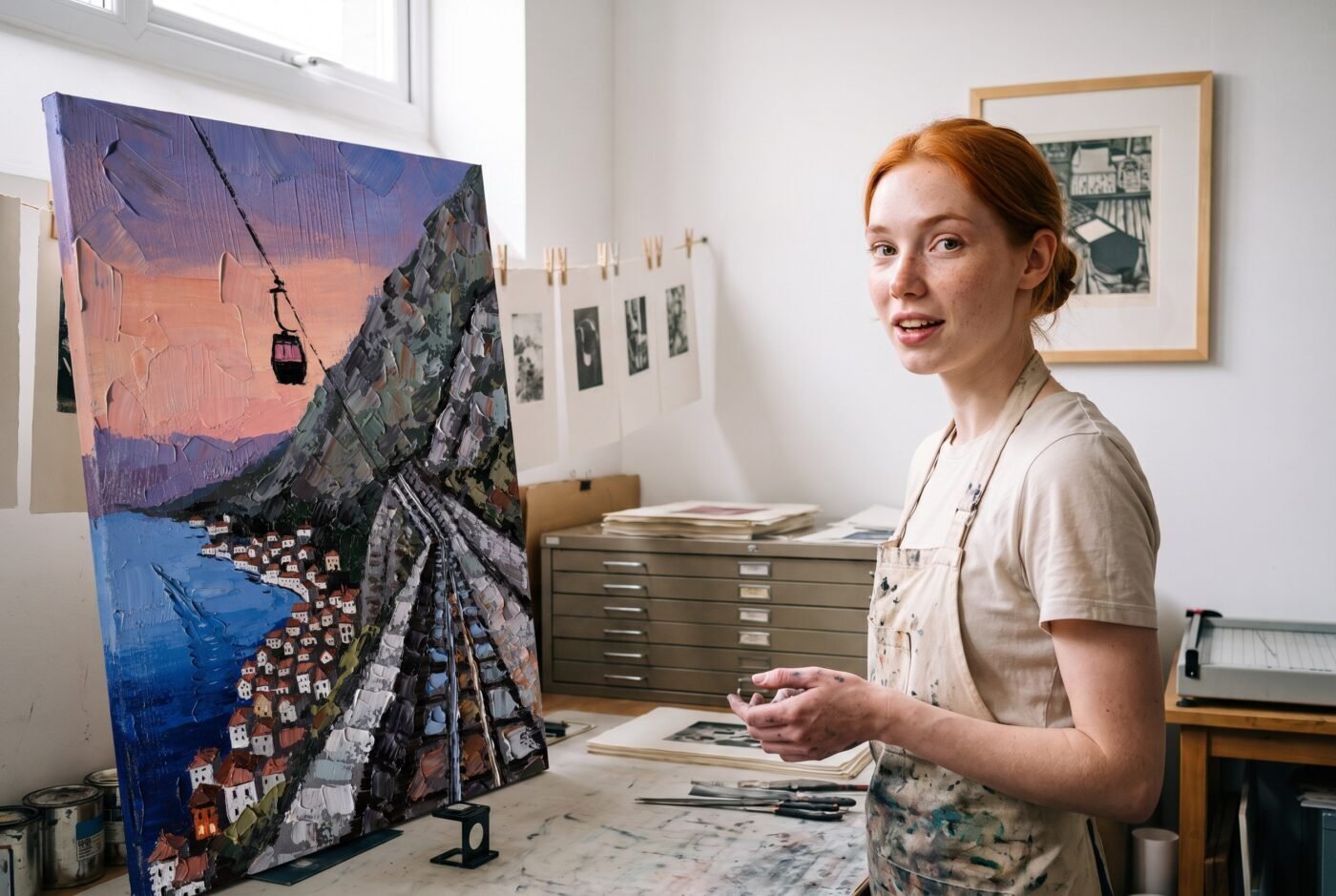
Bellini drags a palette knife through paint to build ridges – raised lines that catch light and hold shadow. In Cable Climbing Blue, those ridges run through the terracotta rooftops, the funicular cable, the blue water far below. They are the reason the town feels stacked and the bay feels deep. On matte paper, pigmented inks reproduce the colour shifts beautifully but the ridges photograph as gradients. You lose the thing that makes it impasto.
Canvas changes that. The cotton-polyester weave has tooth – a slight texture – and the matte coating sits on top of it rather than soaking in. When the digital file maps Bellini’s knife drag onto that surface, the weave cooperates. The ridge reads as a ridge. Not raised paint, but the memory of it. Enough that a lamp at an angle will catch the line between ochre and shadow the way the original does.
The measurements that matter
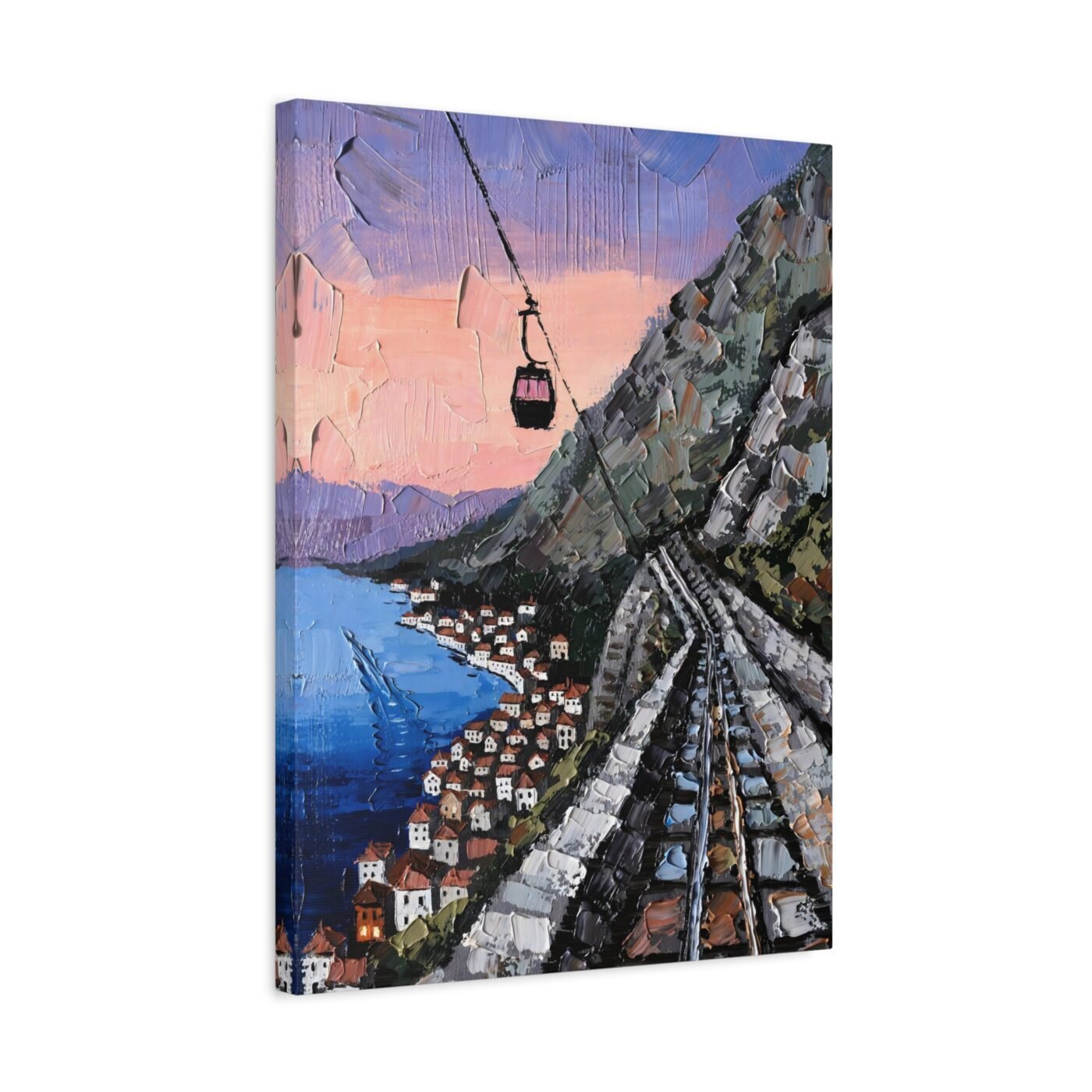
This composition is vertical: the funicular climbing, the town stepping down to the bay, the windows lighting in rows. It works in portrait. The smallest canvas size – 12×16 inches, about 30×41 centimetres – gives you the full sweep without demanding a feature wall. The largest – 24×32 inches – is about 61×81 centimetres, wide enough that the impasto detail stays visible from across a room.
Canvas ships stretched on a radiata pine frame, hanging hardware already on the back, rubber bumpers on the bottom corners so it sits a quarter-inch off the wall. Size tolerance is about an eighth of an inch – it is wood, and wood moves. That is normal. The frame is not finished for display; if you want a border, the framed canvas option adds a floating frame in black or white radiata pine.
Free shipping within the continental United States. Made to order in about ten business days.
Why this one lives on canvas
The palette knife is the structure here. Bellini uses it to separate the warm town – terracotta, ochre, orange lamplight – from the cool bay, which goes from teal to navy as it recedes. Those warm-against-cool shifts are what make a harbour scene work, and the knife drag is what keeps them from blending into mud. On paper, you get the colour. On canvas, you get the colour and the memory of the knife, which means you get the depth.
The score was 8.67 across the panel. Valentina called it a masterful execution of Bellini’s signature style. I agree, and I am saying canvas because the work is built in ridges and the ridges need a surface that will hold them. If you are drawn to the stacked composition and the lamp-down-to-water blue, canvas is the format worth it.
Gallery-wrapped canvas, in 3 sizes — 12×16, 18×24, 24×32 in. Ships free within the continental US.