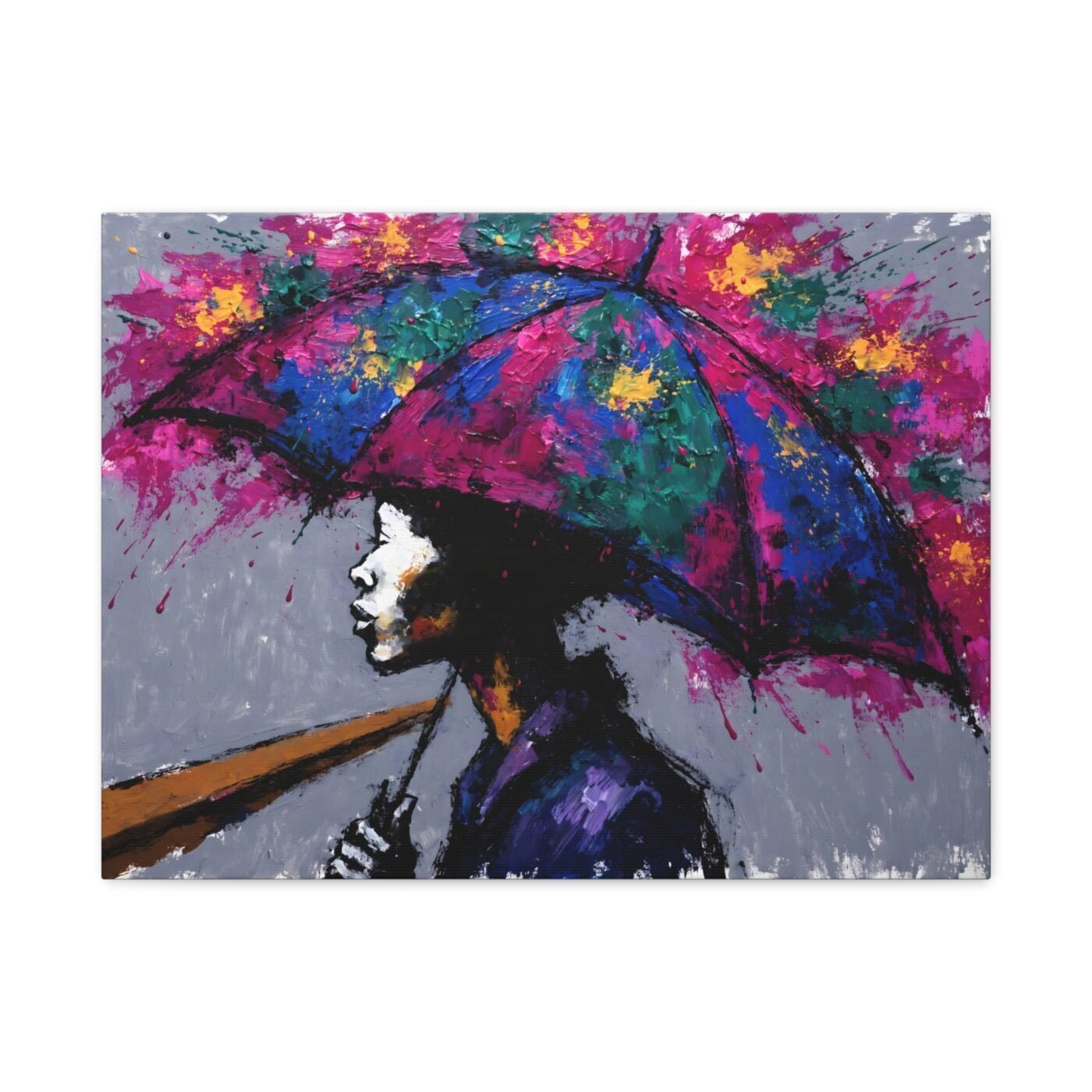
The street stays put. The rain does not.
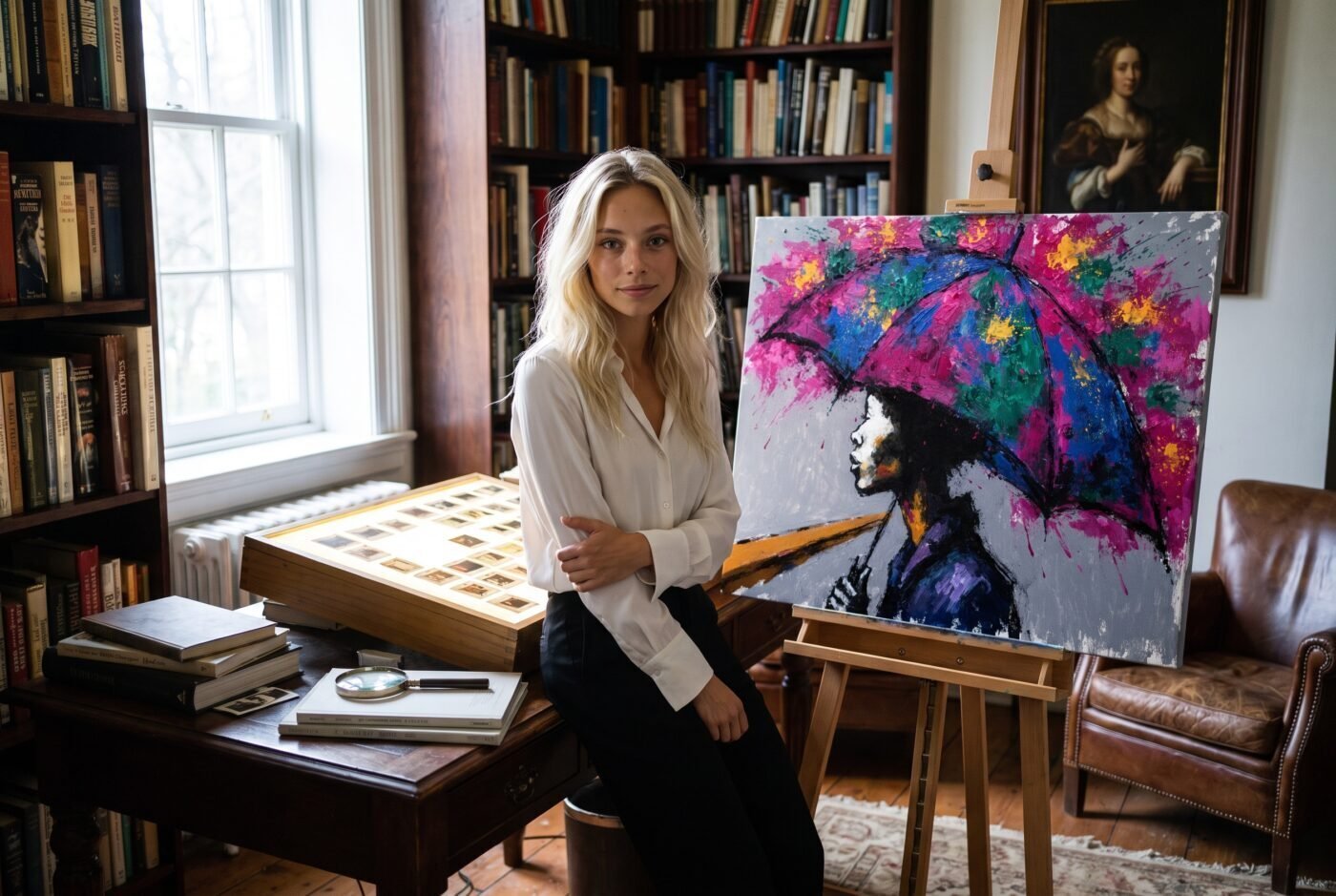
The profile is a device older than portraiture
Brooks is working in the line that runs from Matisse’s cut-outs through Bearden’s Harlem collages to Faith Ringgold’s story quilts: the silhouette as a frame that holds identity without pinning it down. The profile withholds the eyes, and so it withholds the performance of being seen. What it gives instead is presence without availability, a person who exists on their own terms even as you look.
Brooks keeps that refusal—face turned, features soft, the likeness held back—but she adds the thing those predecessors did not need: she makes the air around the figure do the emotional work the face will not.
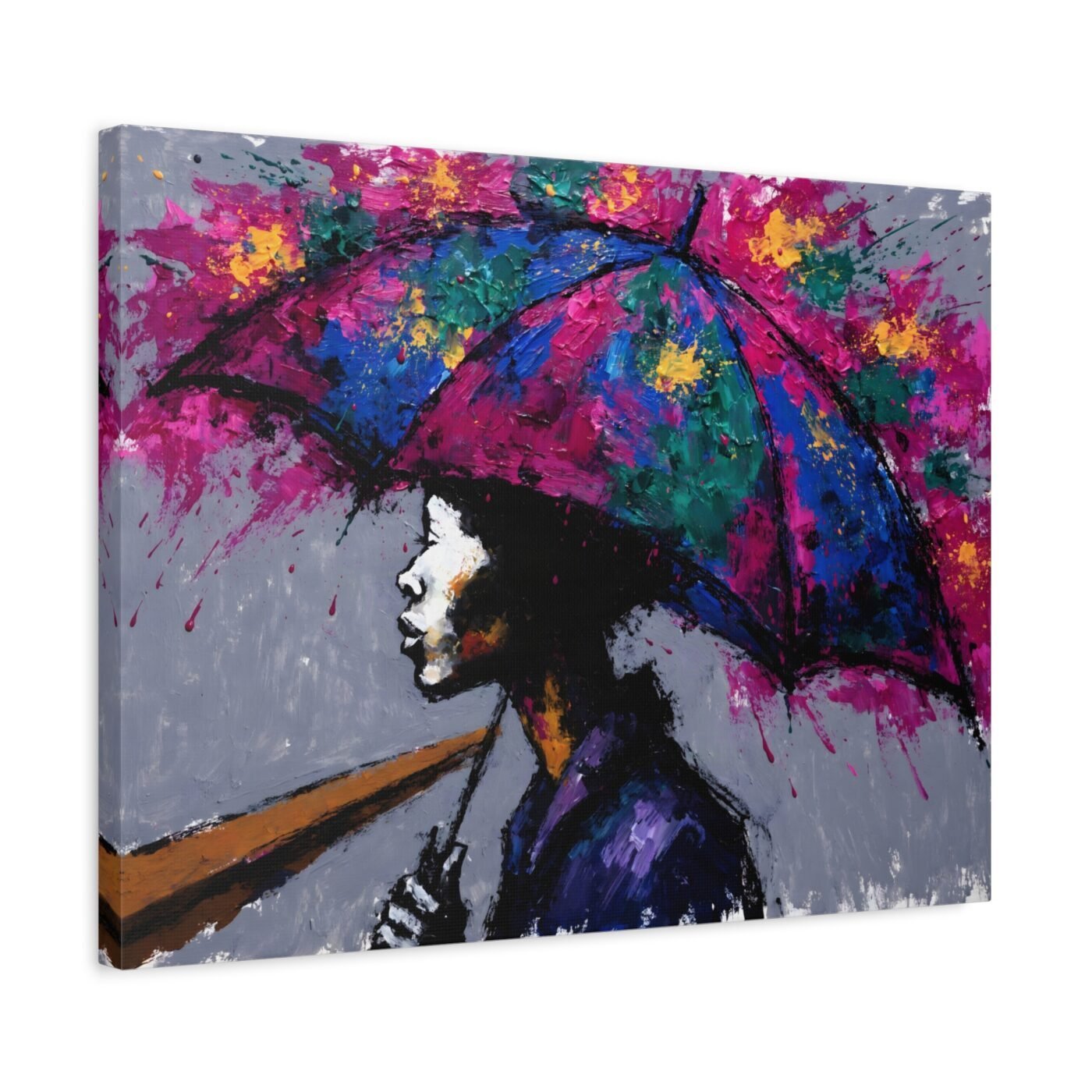
She dissolves the figure upward, not inward
The umbrella is where the practice declares itself. It should be a shield, a edge against weather, but Brooks opens it into colour and lets the rain that should be grey become green and yellow and orange lifting off the canvas. The hair does not end; it blooms into the same strokes as the sky. This is not abstraction eating the figure—it is the figure becoming weather without losing the weight and heft of a body on Flatbush. The ground stays flat, the angle stays certain, and the posture holds.
What goes soft is only what the rain would touch. One decision, in twelve works now, and it is consistent: she will not dissolve the architecture or the stance, only the edge between a person and the air.
Movement earned
This is not a single good piece. It is a vocabulary she returns to, work after work, with the same refusals and the same physics. The profile, the flat ground, the blooming edge, the rich skin tones that do not flatten into decoration—those are not choices, they are a practice. You can see Weather Becoming Hers and know what the next one will hold and how it will differ, and that is what makes a body of work worth following. She has earned the claim.
Gallery-wrapped canvas, in 3 sizes — 16×12, 24×18, 32×24 in. Ships free within the continental US.