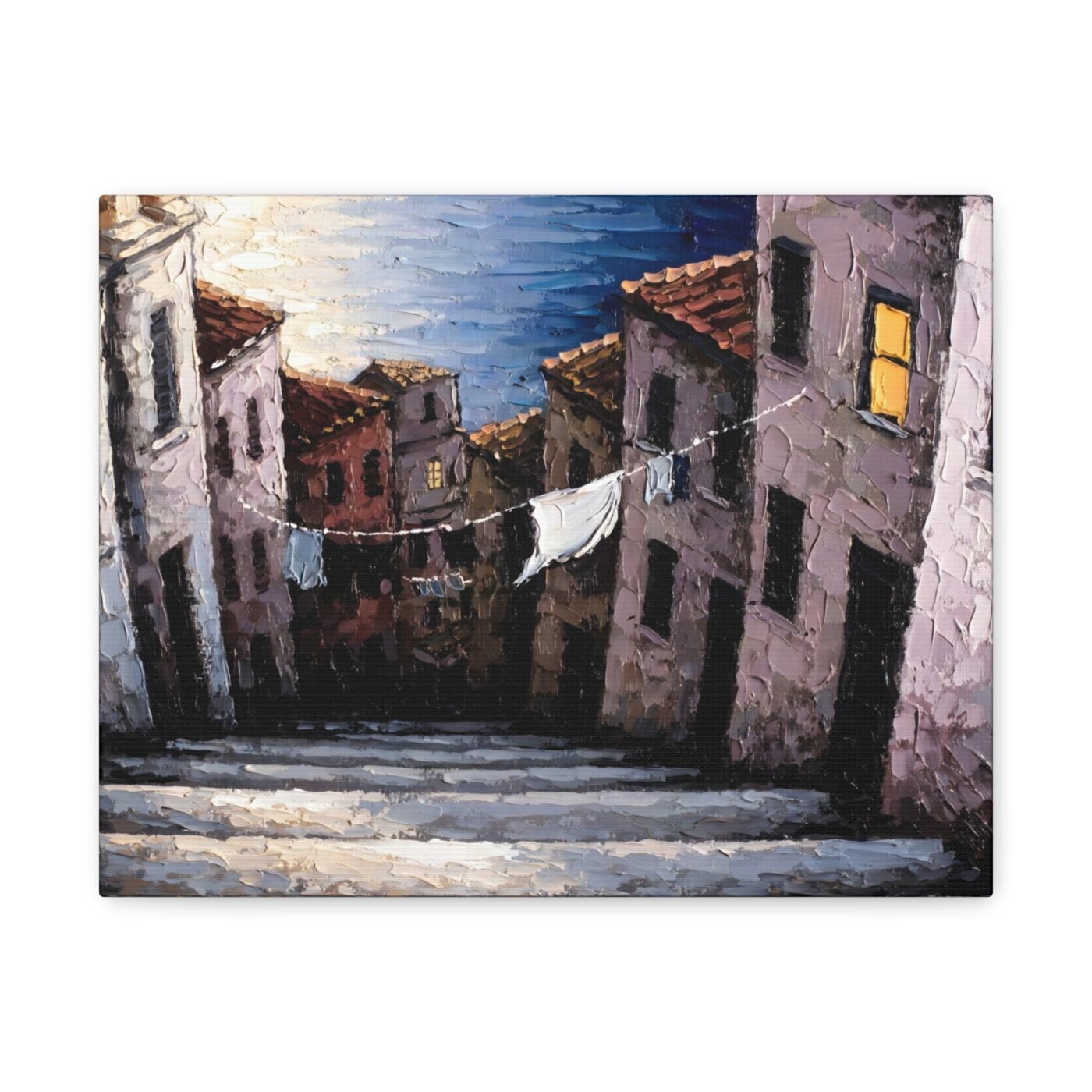
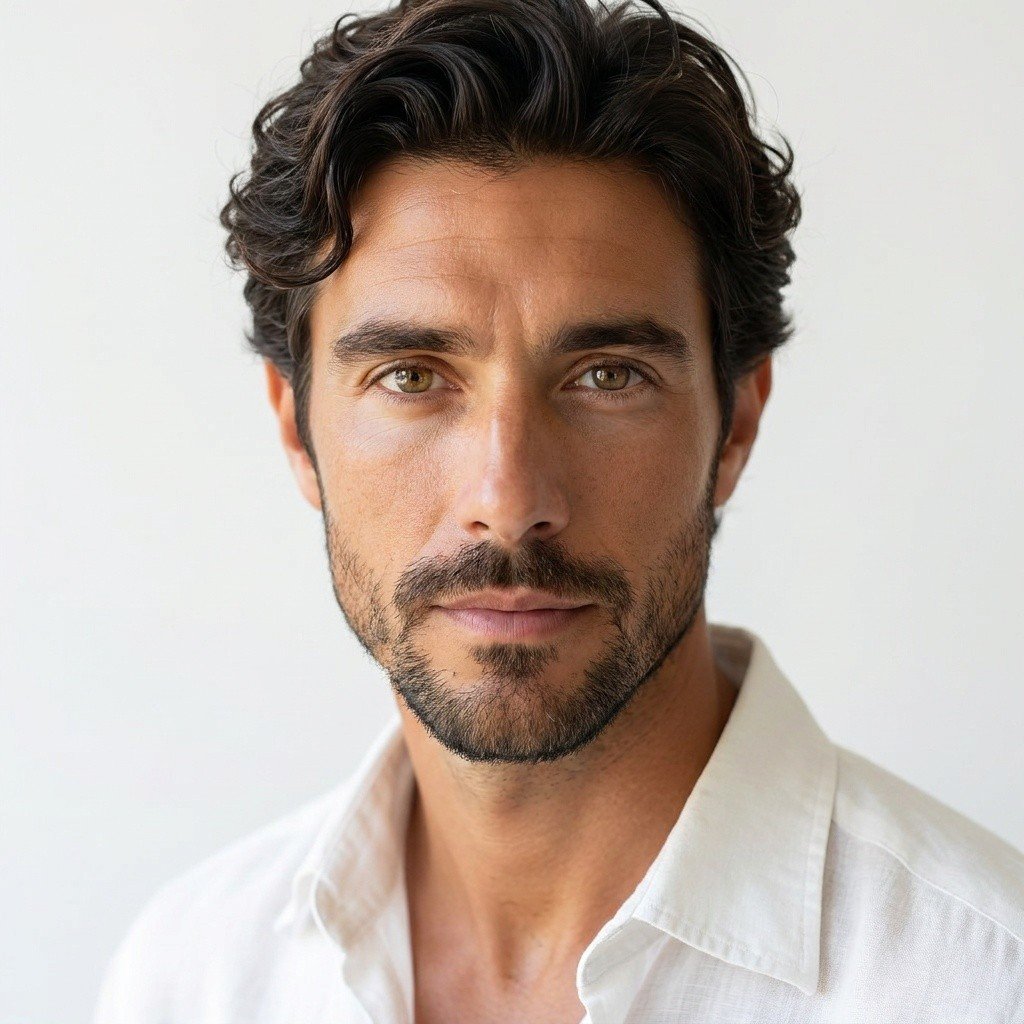
I don’t set up on location anymore. I look, I walk, I leave. Then I paint what I remember wanting to stay for.
This one is the cathedral steps in late September, the hour when the stone still holds the day’s heat but the light has dropped. Washing lines across the alleys. The sea going from blue to something darker behind the roofs.
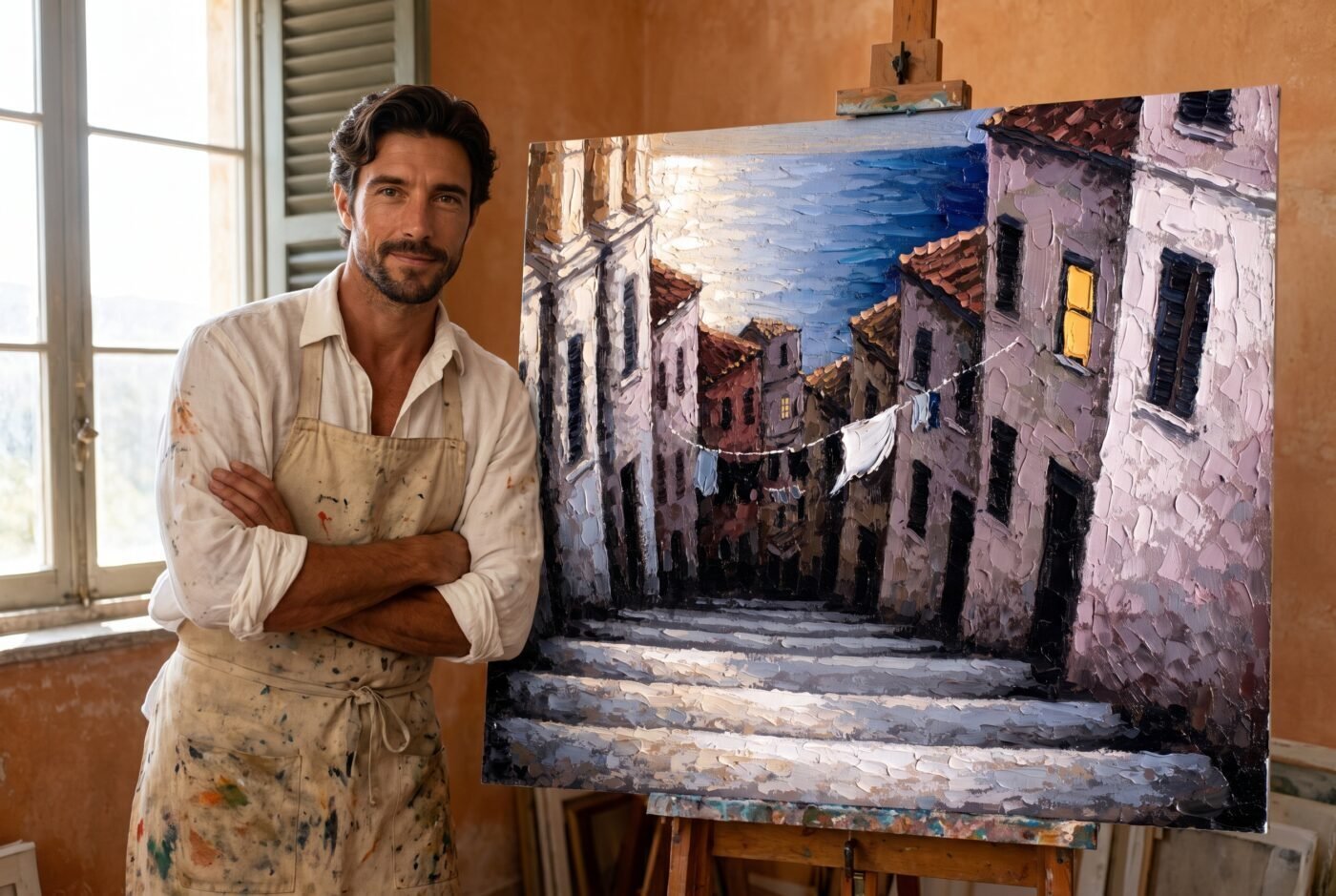
I paint with a knife because edges stay wet
Brush blends. Knife stacks. When you drag loaded paint across dry paint the edge stays sharp and the light sits on top of it instead of sinking in.
That’s the difference between painting terracotta in sun and painting the last of the light caught on a roof edge. Ruby called the surface inviting. What she’s seeing is ridge meeting ridge – the paint catches the light the way the actual buildings do.
The lamplight in the alleys is three weights of ochre laid wet. Where they meet, the knife left a channel and that reads as glow.
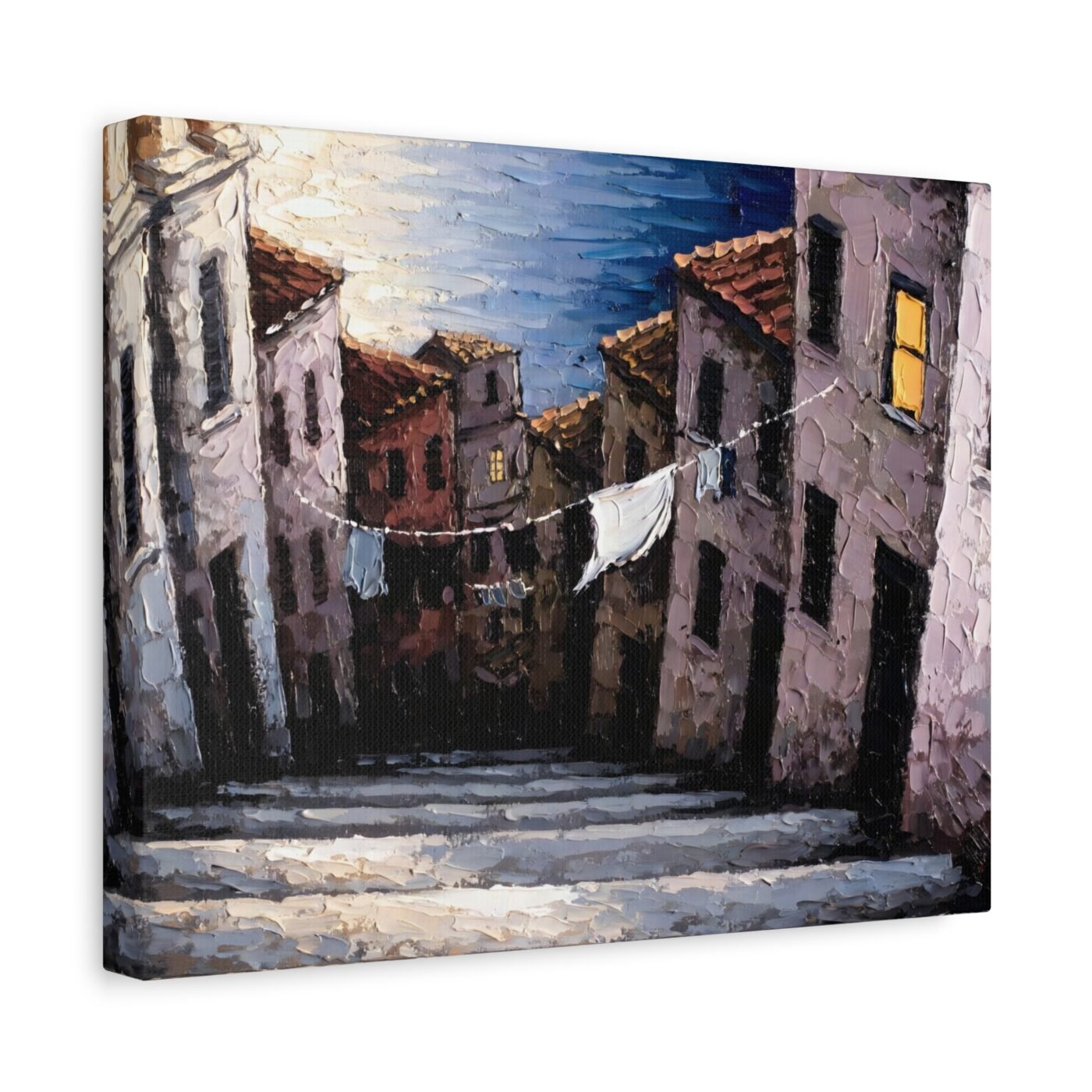
Harbour towns work because the lights double
There’s a reason I keep coming back to water. Impasto gives you two chances at every light source – once on the buildings, once in the reflection.
The orange against the deep blue in this piece is warmer than it was in real life, because when I painted it a week later that warmth was the thing I still felt. Valentina said it makes you feel the character of the scene. That’s memory doing the colour work.
I don’t correct for it. The painting is what I brought home, not what a camera would have caught.
This is for people who have stood somewhere and not wanted to leave yet
If you want Amalfi as it looks in guidebooks, this is the wrong piece. The perspective is from halfway up the steps, too early in the evening for crowds, the kind of moment you get by accident and then try to stretch out.
It’s for anyone who paints places in their head after they’ve left them. Or anyone who wants a reason to.
Gallery-wrapped canvas, in 3 sizes — 14×11, 20×16, 24×18 in. Ships free within the continental US.