

The deer is there the whole time. You just have to stop walking.
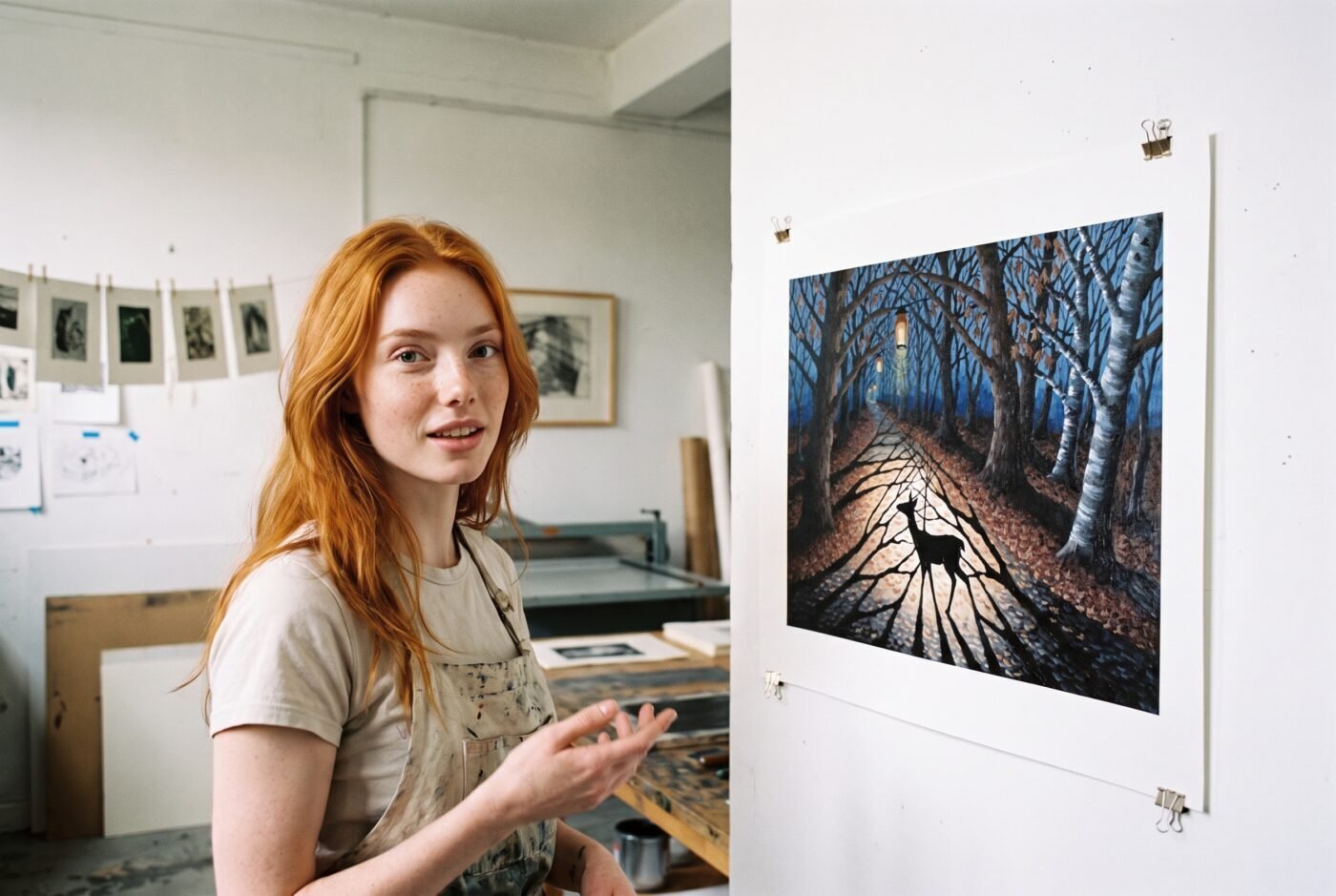
Shadows Walking Home is a lantern path through woods at dusk, and the branch shadows cast across the ground form the silhouette of a standing deer. Not hinted at—formed. The kind of image where you see the path first, then the animal, then you cannot unsee it.
What the file holds
This is a landscape poster on museum-grade archival matte paper with pigmented archival inks, printed to order in the USA and shipped flat. The matte finish means no glare under a reading lamp, which matters here because the piece lives in its shadows. Delacroix glazes from dark to light—deep indigo at the tree line, amber pooling under each lantern, cool violet in the middle distance—and that tonal range, the dmax or darkest black the printer can hold, needs to stay open or the deer disappears into mud.
At 18×24 inches the branch structure stays crisp. Each shadow has an edge. The lanterns glow without haloing, which tells me the file was built with enough resolution and the print holds it. I would not go smaller: the hidden image relies on enough detail that your eye can track a line from antler to haunch to hoof, and at 12×18 that starts to compress.

How it reads on the wall
This is a piece that rewards a second look, which means it wants a place where people pause. A hallway works. An entryway works. Anywhere you pass quickly and then stop. The lantern glow draws you in, the deer holds you there.
The colour palette is narrow—mostly blues and ambers—so it will not fight a room, but it is not neutral either. It wants a wall that can take a bit of theatre. If your space is all white and pale wood, this will announce itself. If you have other saturated pieces, it will sit comfortably.
Unframed means you will need a frame, and I would keep it simple: black or dark wood, nothing ornate. The image has enough going on. Let it do the work.
The hidden image logic
Delacroix’s method is to build a second image into the reflections and negative space of the first, and here it is the branch shadows on the path that form the deer. This is not a trick-of-the-eye puzzle where you squint and maybe see a face in the clouds. The deer is structurally present. The branches are placed to make it happen.
That discipline—drawing the deer first, then building the lantern scene around it—is what makes the reveal land. You see the path. You see the deer. You understand the path was always the deer. It is a specific kind of pleasure, and it is repeatable. Guests will ask about it.
Poster format is the right call
At this price point and at this level of tonal complexity, the poster format delivers. The matte paper holds the shadow detail without gloss interference, the pigmented inks keep the colour stable, and the print quality is clean. You could frame it under glass or pin it directly, and either way the image will read clearly from across a room and resolve into the hidden deer when you get close.
If you want a piece that does two things at once—sets a mood and then surprises—this one does both without gimmick. The deer is earned. See the rest of Delacroix’s Hidden Dusk work and the print options at Printasso.
Matte fine art poster, in 3 sizes — 16×12, 24×18, 32×24 in. Ships free within the continental US.
