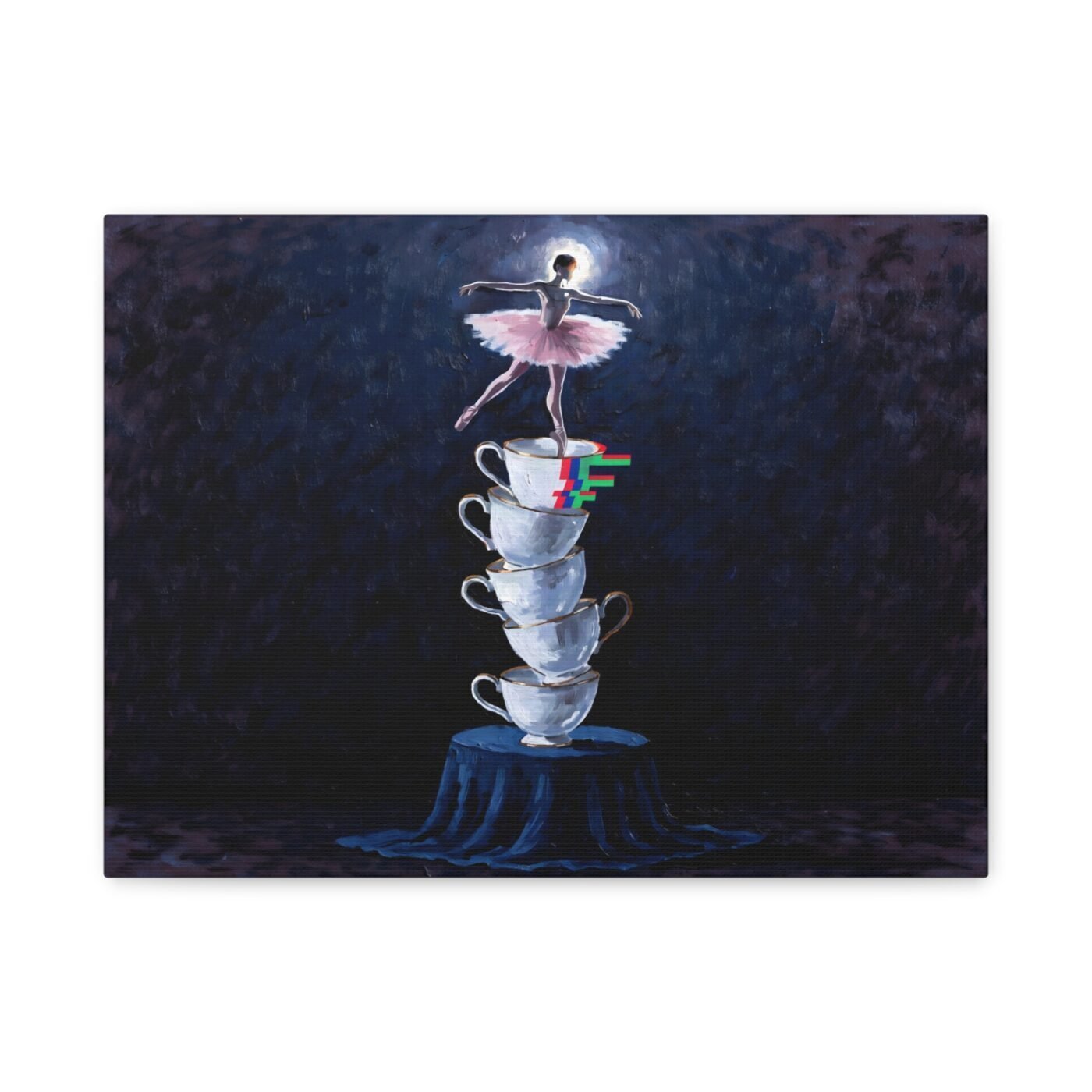

I spent two weeks getting the stack right – the weight distribution, the light catching each rim, the shadow work that makes porcelain read as porcelain. Then I corrupted the top cup on purpose and left it corrupted.
I am Zara Moon. I stage theatrical scenes with a single glitched element, one inverted rule per piece, and velvet-dark grounds that make the lit objects pop. This one is about poise held against a system that is already failing.

The teacups are a tower and a countdown
Stacked porcelain is precarious by nature. I needed that. The ballerina’s balance only matters because the structure under her is one nudge from collapse.
The cups get smaller as they rise – correct physics, correct staging. The top one glitches into fragments and distortion. That is where the title lives. She is defying physics by staying up while the system she stands on visibly breaks.
Charlotte called it ‘balance and calamity’. That is exactly the line I was chasing.
The glitch is in the wrong place
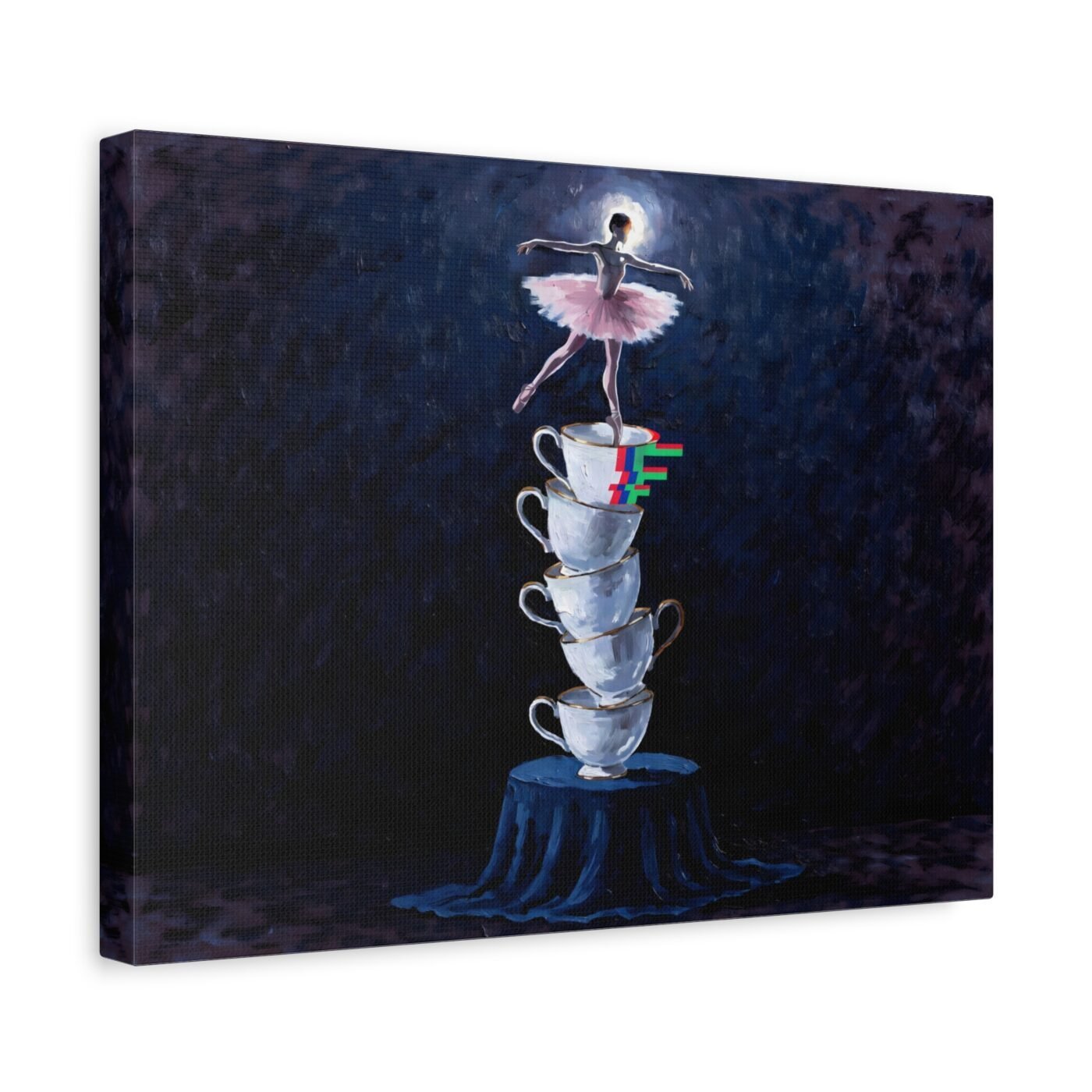
Normally you glitch the figure – the subject breaks down, the ground stays stable. I inverted it. The ballerina is perfectly rendered, classical technique, no corruption. The object she stands on falls apart.
It reads backwards at first. Your eye expects her to be the unstable thing. Then you see the cup fragmenting under her foot and the whole piece flips. She is not the problem. The platform is.
Ruby called it a perfect embodiment of Velvet Absurd. The glitch is not decorative. It is the plot.
Valentina scored it 9.5 for compositional mastery
I will take that. But I want to push back on ‘mastery’ as the read. The composition works because it is just barely holding together, not because it is resolved.
The tower of cups is off-centre. The ballerina’s extended leg creates a diagonal that pulls your eye up and right. The glitch at the top breaks the movement and sends you back down. It is a loop, not a resolution. Mastery implies control. This piece is about control failing while the performer stays upright.
Valentina is right that the staging is tight. But the tightness is in service of the unravelling, not instead of it.
For whom
For anyone who has held a position while the ground shifted. For a studio, a hallway, a room with enough wall to let the dark field breathe. It is loud in a quiet way – high contrast, theatrical staging, a single point of collapse.
Not for: a pastel room, a space that wants calm, or anyone who needs their surrealism cheerful. This one has teeth.
See Porcelain Defying Physics →
Gallery-wrapped canvas, in 3 sizes — 16×12, 24×18, 32×24 in. Ships free within the continental US.