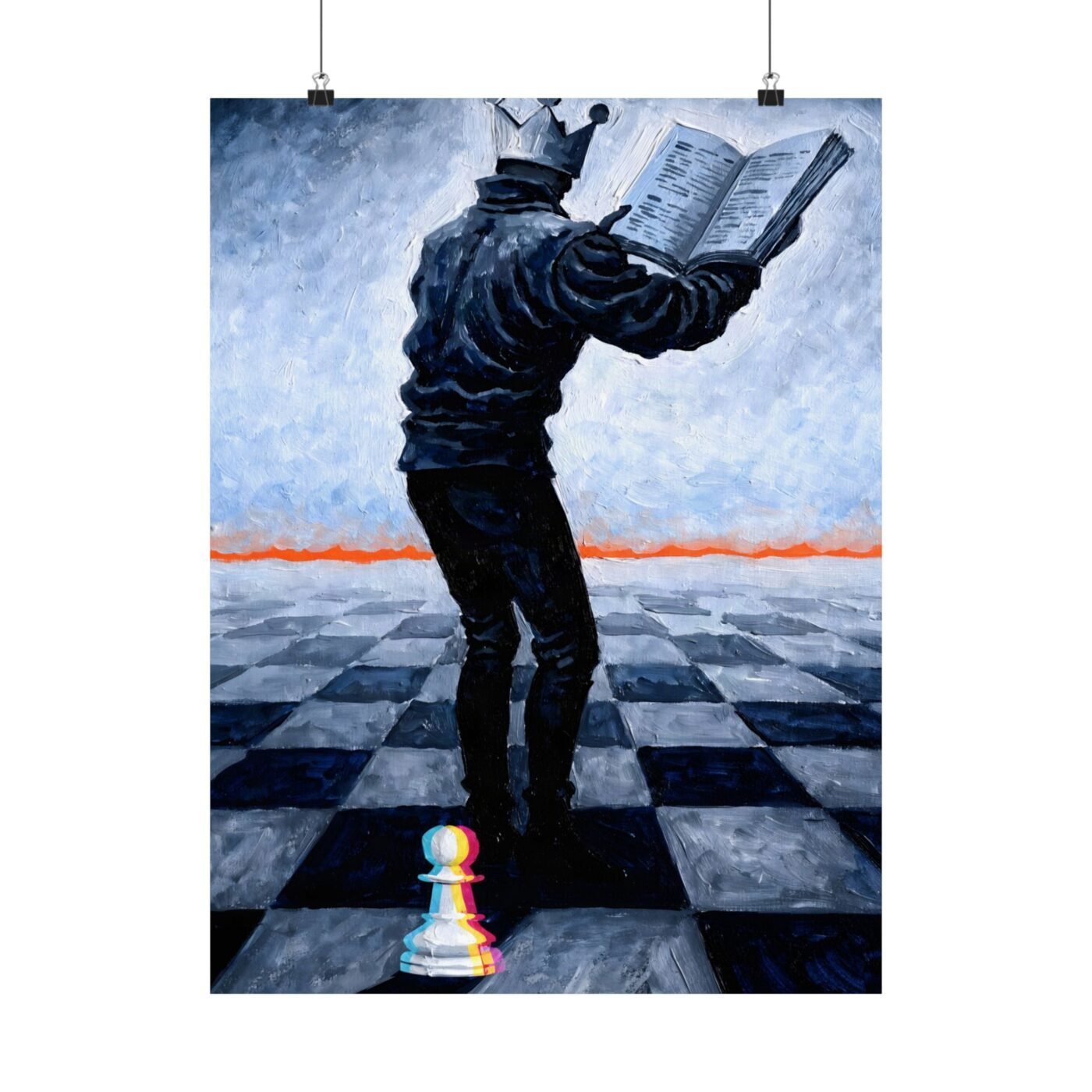

I’ve been working with chess pieces for three prints now because they let me stage power without explaining it. Everyone knows what a king does. So when he’s alone on a board that ends in fog, holding the manual the wrong way up, you don’t need a caption.
The inversion is always in the title. Here it’s direction — the piece with the least freedom consulting instructions he can’t read.
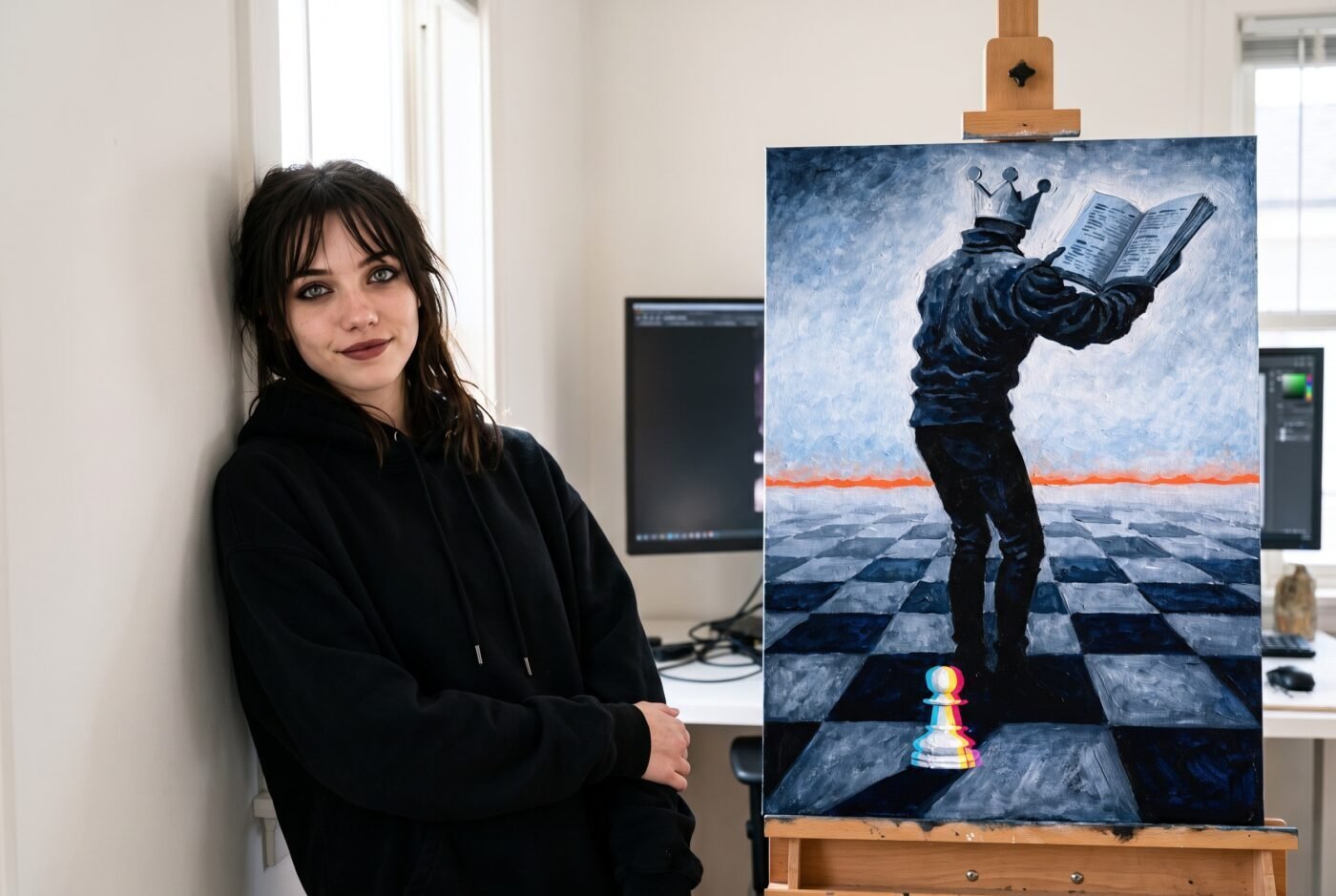
The glitch sits where you’d expect the next move
One pawn flickers at the edge of the board. Not dramatic, just gone enough that you notice the space more than the piece. I keep the glitch small because the theatre is in the props, not the special effects.
Ruby called it a “striking visual narrative” and she’s right that the twilight does most of the work. Velvet darks, one light source I never show you, fog where the board should continue. The pawn glitches in blue-white, which is the only colour that isn’t a shade of charcoal or burgundy.
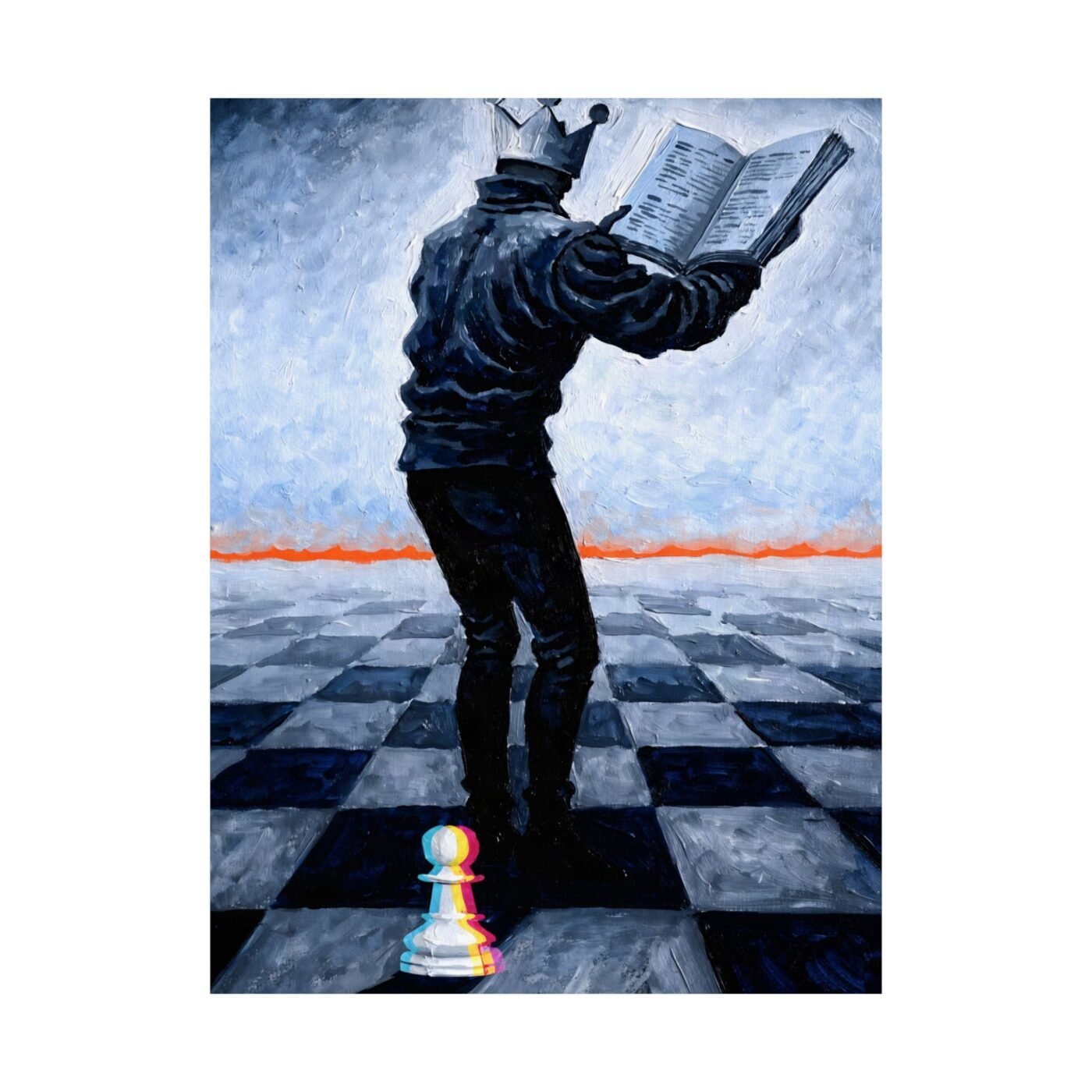
The rulebook was the hardest object to paint
Getting a book to read as upside down without looking like a mistake took four tries. The spine faces the wrong way, the pages fall against gravity, and the king’s grip is just awkward enough. It’s a small detail but it’s the one that makes the title land.
Charlotte said the piece was “unforgettable” and I’ll take that. Memorable is the goal when you work in series. Someone who sees this should want to know what the queen does, or the rook.
This is for people who like the question more than the answer
If you want chess paintings that explain strategy, this will disappoint you. If you like surrealism that shows you the exit, wrong piece. This is staged absurdity with one broken rule and no resolution, part of a body of work about systems that don’t know they’ve stopped working.
Matte fine art poster, in 3 sizes — 11×14, 16×20, 18×24 in. Ships free within the continental US.