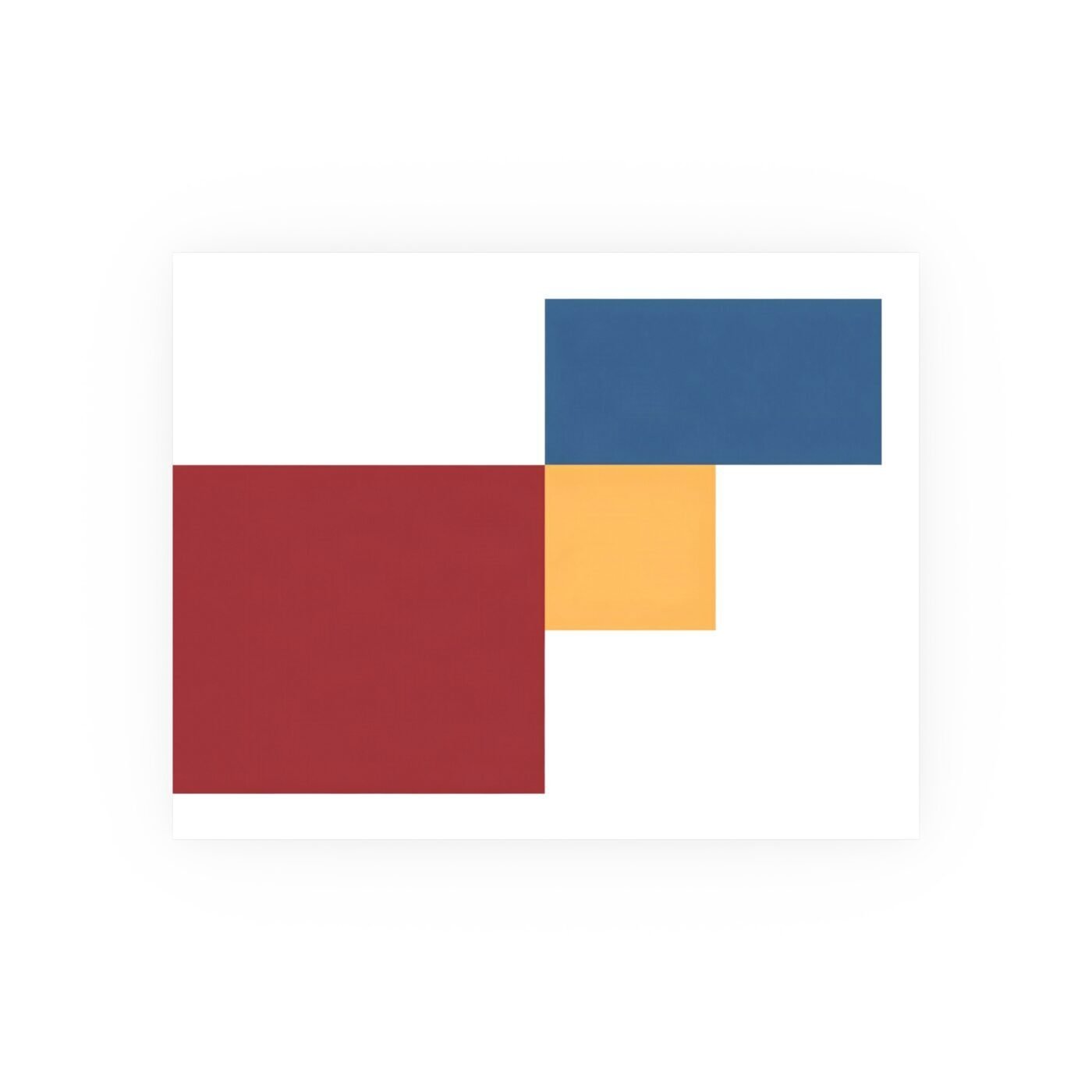

The problem was simple: three blocks, different weights, one plane. Make them balance without centering any of them.
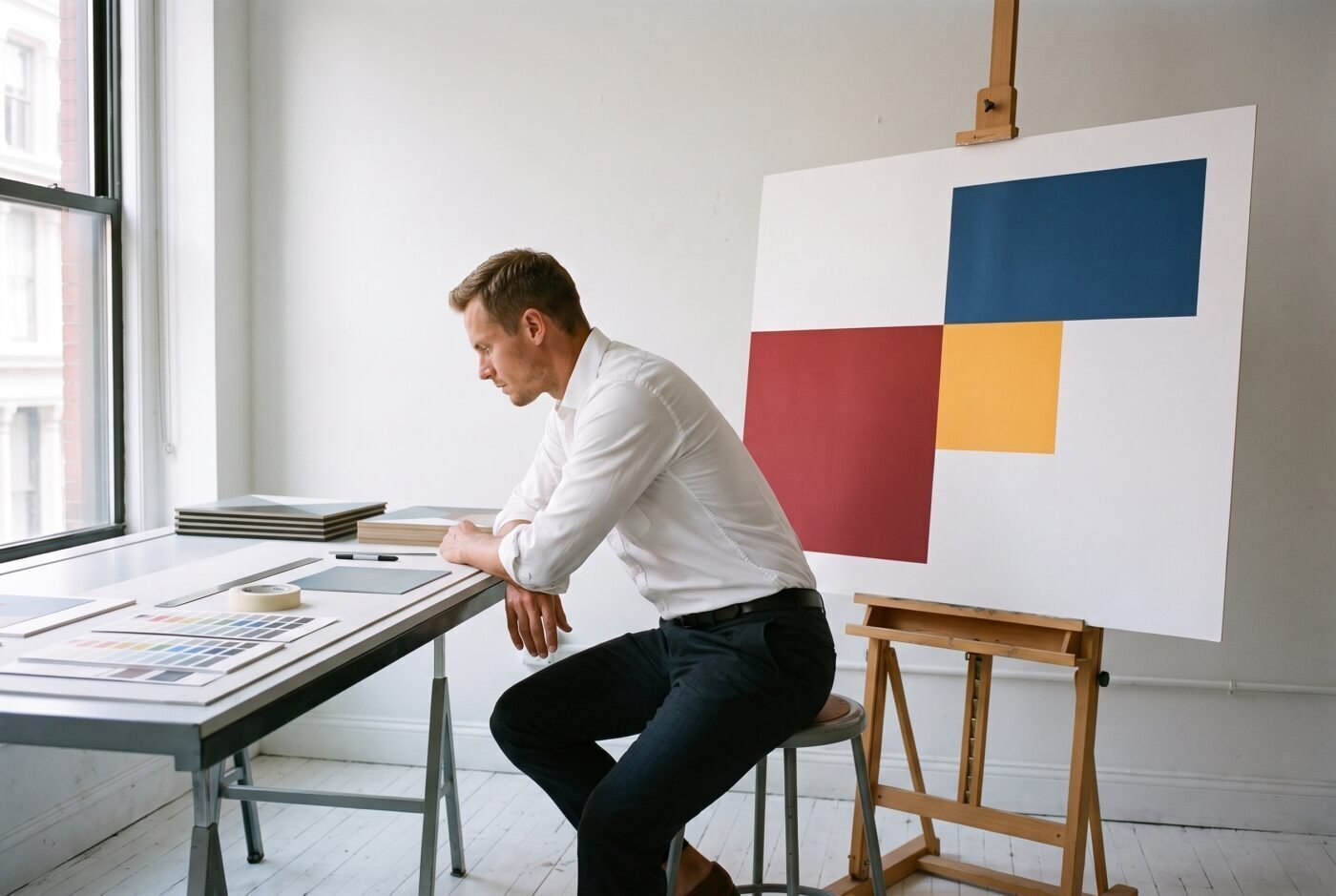
I spent two weeks on configurations that almost worked. Seventeen attempts where the eye wanted to correct something, where the composition pulled left or settled too heavily on one edge. The mathematics were sound but the optical result kept failing. A structure can be geometrically correct and still feel like it wants to tip.
The Moment Something Locks
Equilibrium is not about equal distribution. It is about counterweight – one mass answering another across distance, the way a cantilever works. The rust block sits low and left. The cream block floats high and right. The slate block between them does less than you think: it barely participates in the weight, but it holds the sightline that makes you believe the other two are connected.
Remove the slate and the composition falls apart, even though by area it is the smallest element. That is the part I kept getting wrong – trying to make all three equal players when the actual structure needed one block to do almost nothing except exist in the right place.
This is how architectural load works. Not everything carries weight. Some elements simply hold a line so the forces make sense to the eye.
What Hard-Edge Geometry Costs You
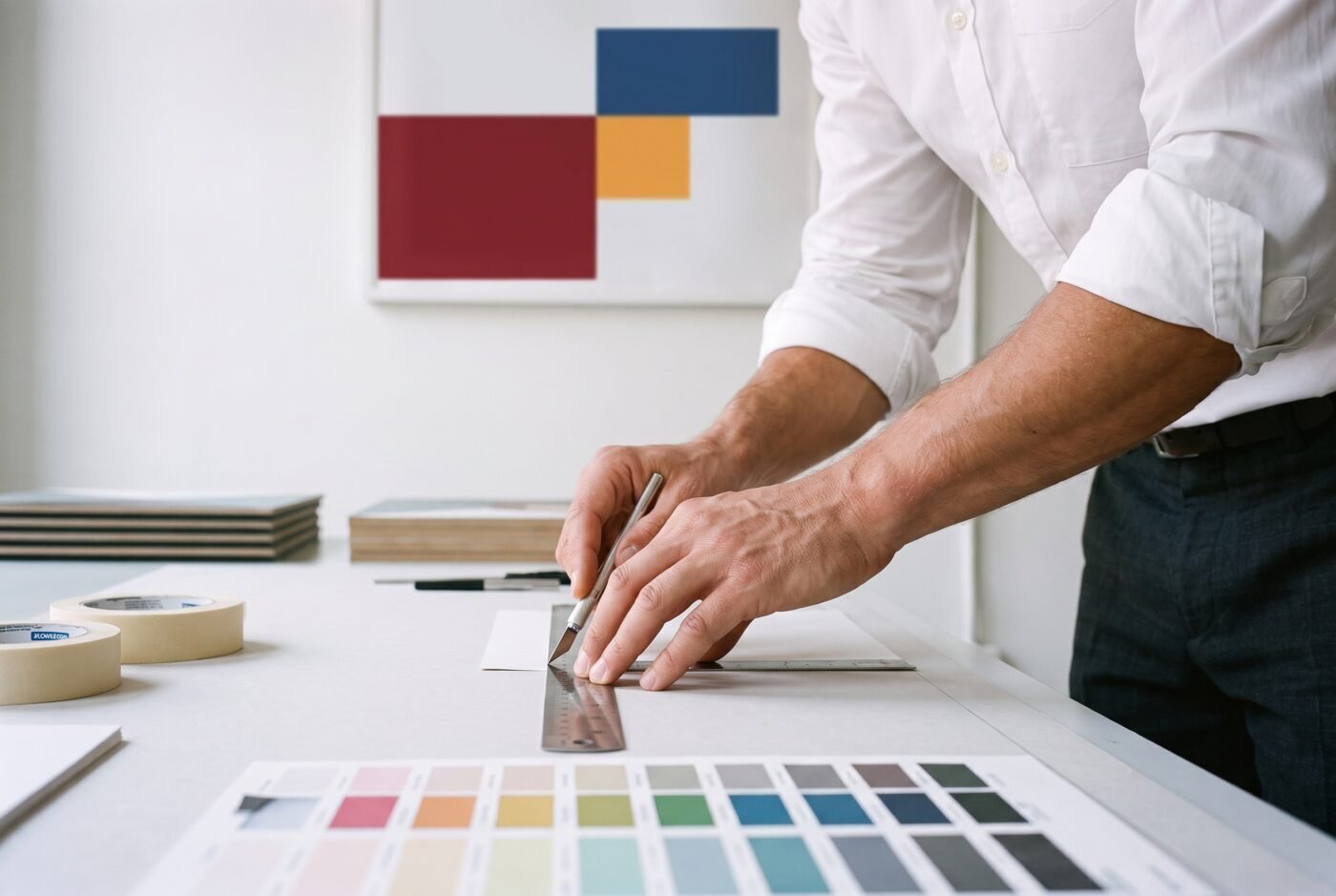
I work in straight edges and flat matte colour because that restriction forces you to solve problems you could otherwise fudge. Put a gradient in the rust block and you can fake depth. Let an edge blur and you can suggest weight without earning it. The moment you allow painterly looseness, you stop having to think about proportion.
Hard-edge geometry gives you nowhere to hide. If the balance is off by two percent, you see it. If one block is the wrong width, the whole thing collapses. There is no atmospheric perspective to soften a mistake, no texture to distract from a failed structure. The work either stands or it does not.
That is the thing I keep coming back to: structures that resolve cleanly or do not resolve at all. No middle ground, no almost. When I finally placed these three blocks in a configuration that held, I knew immediately. It stopped asking to be adjusted.
Why Asymmetry Feels More Resolved
A centered composition is stable by default. Three blocks arranged symmetrically balance because they have to – there is no other option. That kind of stability costs nothing.
Asymmetric balance requires calculation. You are setting up a problem the eye does not expect to resolve, then resolving it anyway. The rust block should make the whole structure lean left, but the cream block is positioned far enough right, and large enough, to pull against it. The slate block pins the center of gravity just off-center, which is where it needs to be for the counterweight to read.
The composition does not feel balanced because it is symmetrical. It feels balanced because you can see it working to stay upright, and it succeeds. That effort is visible in the final piece. A room responds to that differently than it responds to automatic symmetry.
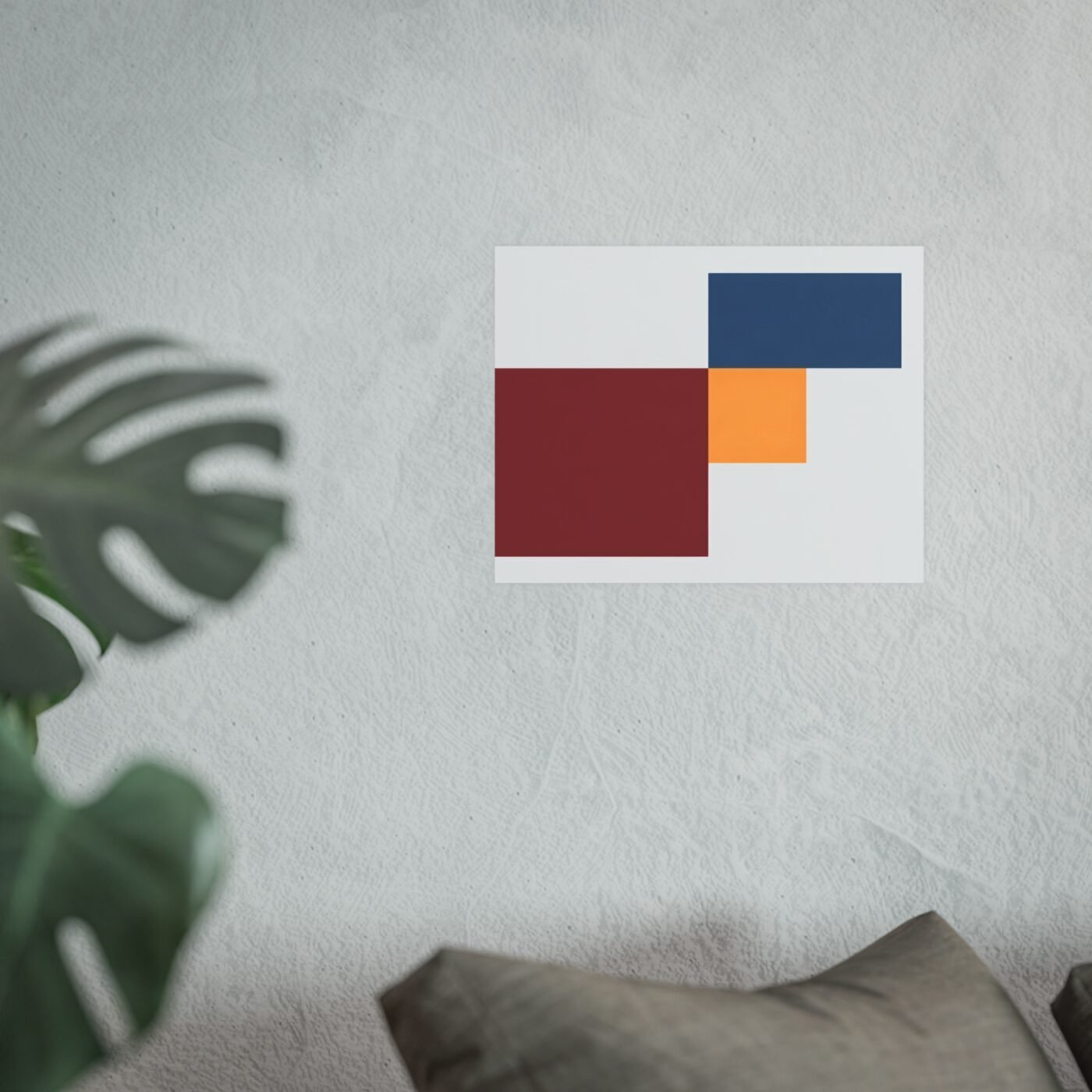
People who follow this work already know I set up structural problems and solve them in public. This one took longer than most, but the solution is cleaner. Three blocks, calculated in eighths of the frame, locked into asymmetric suspension. Equilibrium Attained exists as a print here, if you want to see how it holds a wall.
The next piece will likely return to the same problem with four blocks instead of three. I am not done with counterweight.